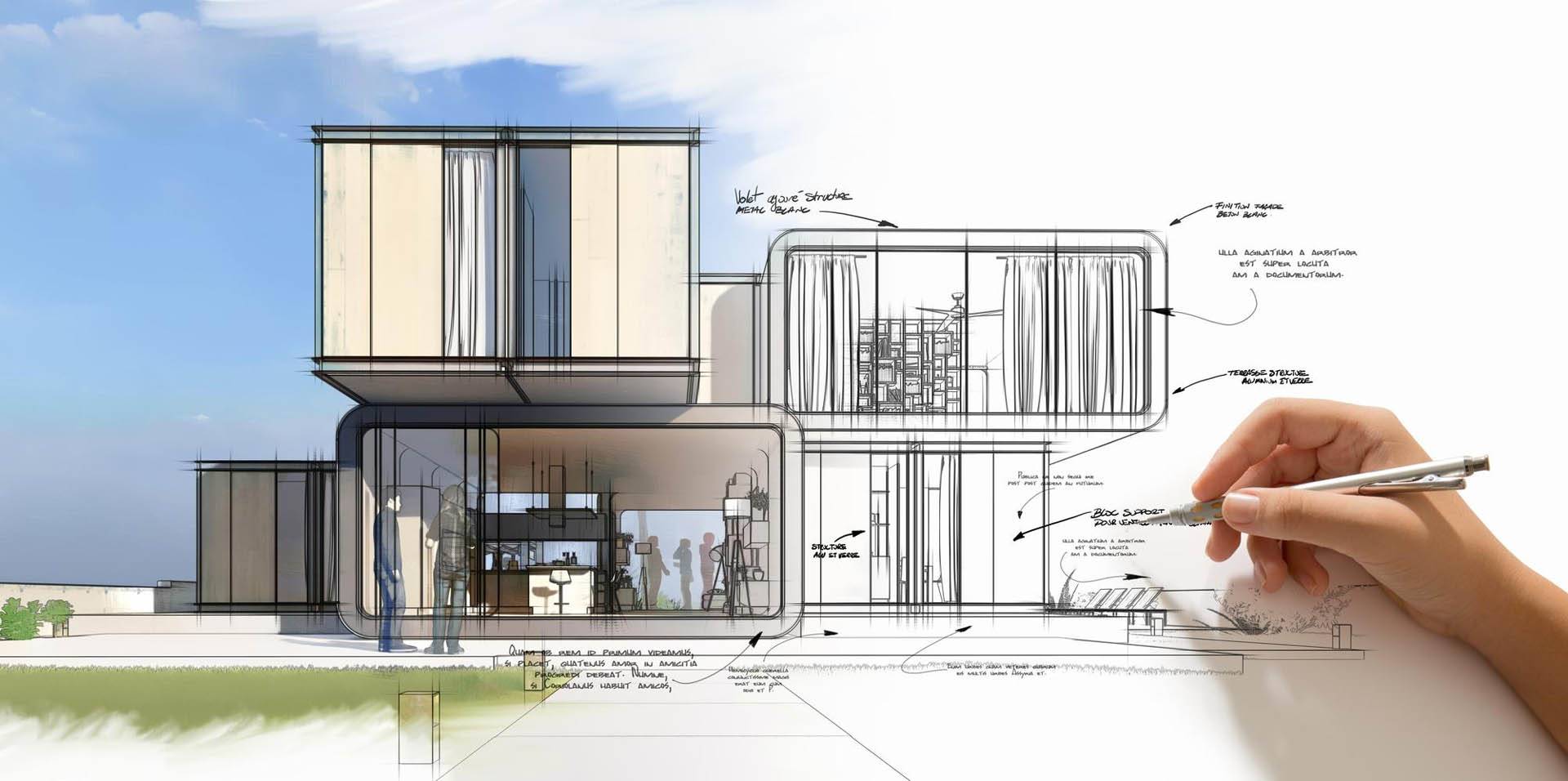
Knocking down a wall to enlarge a room, such as extending a living room or opening up a kitchen, is tempting. But a load-bearing wall is not a simple partition, non-load-bearing wall, or drywall. It’s part of the building’s structure, the very thing that supports the loads of the floors, the subfloor, and sometimes even the roof.
In a Geneva apartment, especially in an older building or a condominium, creating an opening in a load-bearing wall—the central element of a quality interior renovation—requires careful planning. The right technique isn’t enough; you also need accurate calculations, the correct sequence of work, and rigorous quality control. Here’s how a well-executed project is planned and managed.
Before opening, the static expertise establishes the framework
The first step is to understand what the wall is actually supporting. Its composition matters: concrete, masonry, stone, solid brick, or a composite wall. Its thickness doesn’t tell the whole story. A thin wall can bear a significant load, while another might appear massive without being the main load.
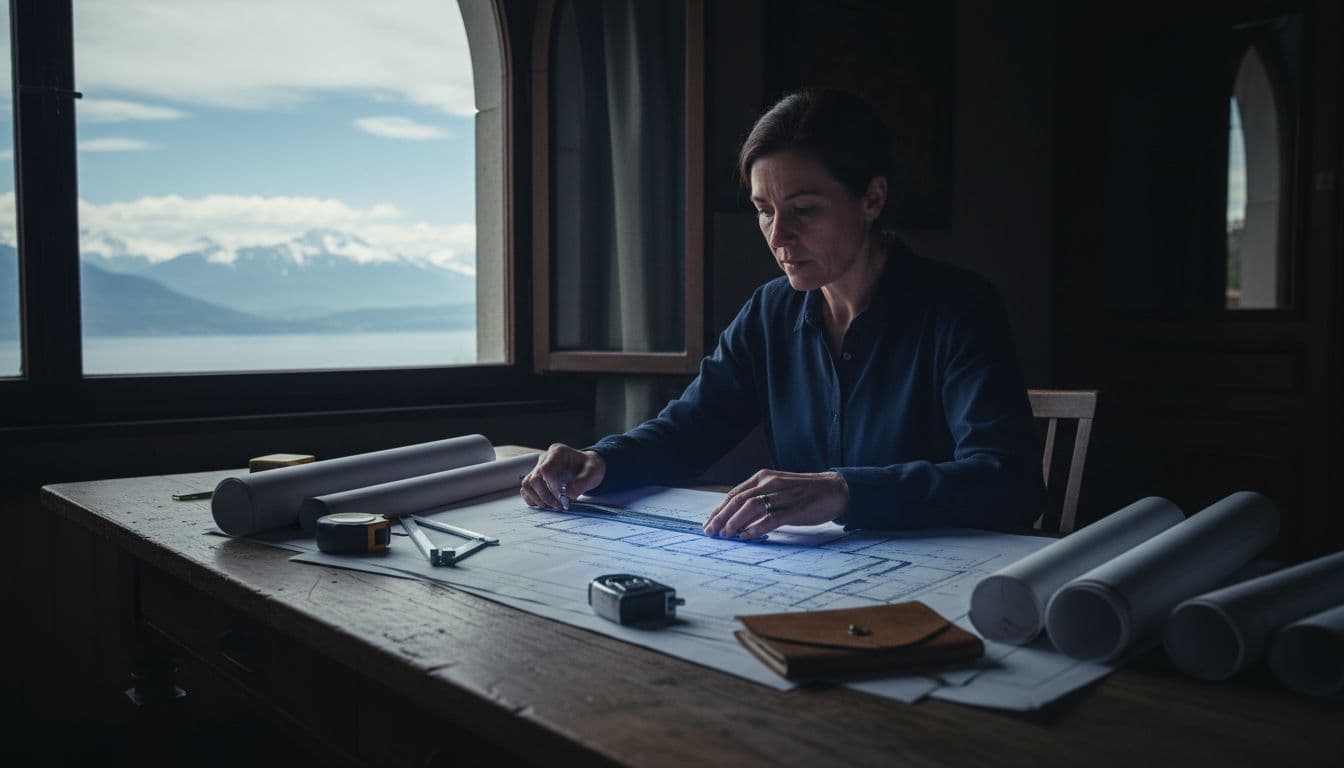
The structural engineer starts with the existing plans, then verifies them on site. They observe the direction of the joists or slabs, the supports, the load transfers above and below, as well as the condition of the building. In an old building in Geneva, it is also necessary to examine any existing deformations, old cracks, moisture, and repairs carried out over the decades.
A good survey also looks for the invisible. Electrical networks, water pipes, heating, ventilation, sometimes even shared service ducts—everything must be located before the first cut of the disc. That’s often where delays lie.
In Geneva, building renovations generally require a building permit or planning permission, which must be confirmed as appropriate. Before initiating this phase, property owners should request a quote. The application typically includes plans, calculations, and validation by an engineering firm. A well -managed load-bearing wall renovation project in Geneva begins with this phase, not with demolition.
A structural intervention is prepared based on documentation, not intuition.
The living environment must also be considered. Site access, elevator protection, noise, dust, intervention times and informing the neighborhood can have just as much of an impact as the technical aspects.
Shoring, gradual opening and reinforcement installation
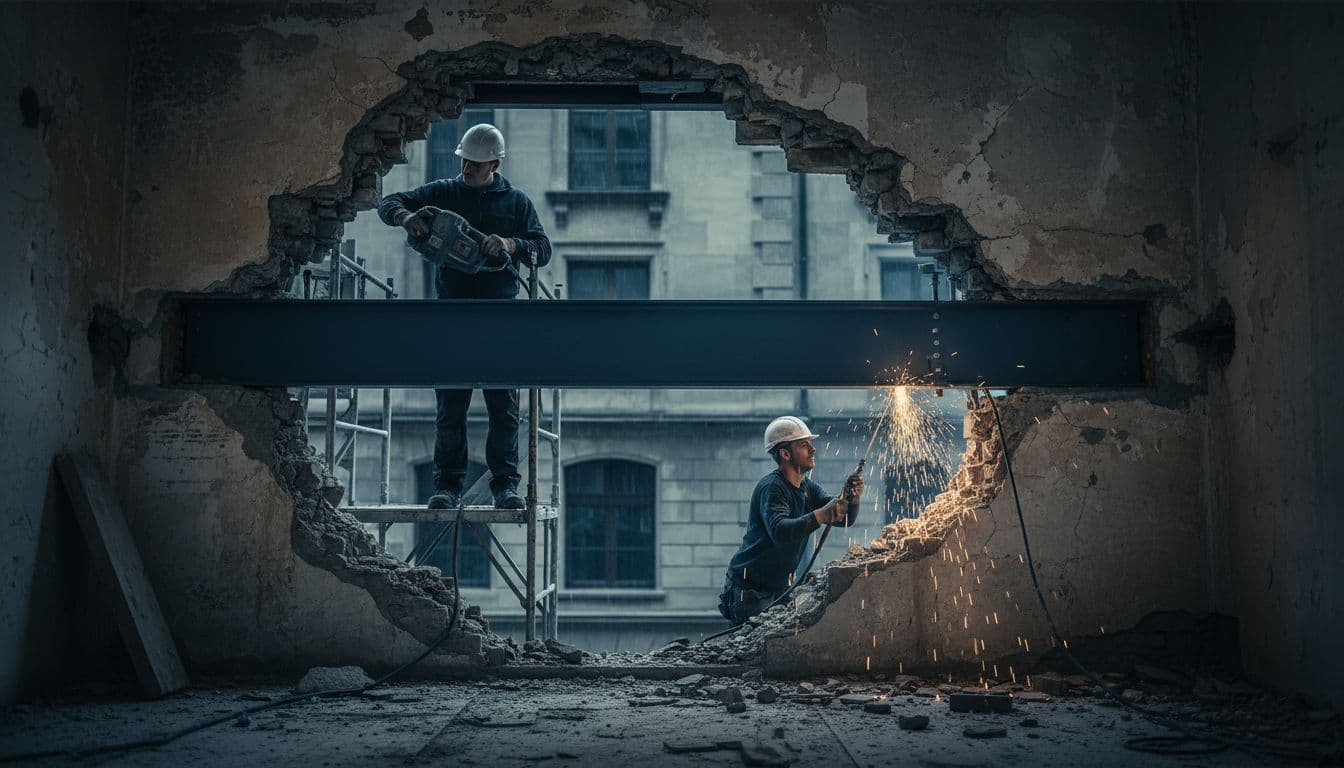
Once the study is approved, the work begins. First, the company protects the access areas, secures the surroundings, and prepares for the removal of debris. Next, they install the shoring. This step is crucial, as the loads must be temporarily transferred before any sawing can begin on the concrete wall.
In practice, metal supports with crossbeams or load-bearing beams are installed on either side of the wall. The aim is to properly distribute the load during the work. In a high-end property, this phase also requires careful attention to vibrations to prevent damage to nearby finishes, woodwork, or decorative ceilings.
The entire structure is never opened up at once. The company works in stages. First, it creates the recesses for the supports using a concrete saw, then it clears the area for the future beam through demolition work. Depending on the calculations, the underpinning can be an I-beam, a steel beam such as an HEA or HEB, a metal connection, a glulam beam, or another solution approved by the engineer. The choice depends on the span, the loads, the available height, and the space for the supports.
The profile is installed with precision. The lateral supports must be sound, stable, and adequately sized. If the support is weak, it must be reinforced beforehand. Once the beam is in place, the team adjusts its level, shims, secures it, and then performs the necessary cleating or infilling to transfer the loads. Only after this transfer, and after verification, can the rest of the wall be demolished.
As in surgery, each step prepares the next. Going too fast risks cracking neighboring walls, creating local subsidence, or damaging the finishes.
Checkpoints to follow before, during and after
A beautiful opening isn’t enough. What matters is the quality hidden behind the finishing touches. The purpose of these checks is to ensure the structure’s safety during the creation of openings. To achieve this, the renovation company and the masonry contractor must follow several simple but crucial points during the construction process.
Here is a useful checklist for masonry work , organized around the main structure (structural work) and the finishing work (finishing).
structural work
- Nature of the wall confirmed : the wall corresponds well to the study and the surveys.
- Networks identified : no pipes or conduits are cut unexpectedly.
- Stable shoring : loads taken up before demolition, without improvisation.
- Reinforcement supports checked : width, flatness, condition of the support and shimming.
- Cracks being monitored : new cracks, doors rubbing, ceilings moving.
- Controlled vibrations : especially in old or occupied buildings.
- Moisture treated : dry surface or suitable solution before finishing.
- Document compliance : as-built drawings, technical validation, exchanges with the PPE if necessary.
Second work
After installation, the levels, door clearances, condition of adjacent ceilings, and the reconnection of utilities are checked. Then come the finishing touches: filling gaps, cladding beams, repairing plaster, painting, and sometimes integrating a false ceiling or lighting. However, the finishing touches must never conceal any structural issues.
To compare control and reinforcement methods, this summary of technical rules to be followed when opening a load-bearing wall can usefully complement the discussion.
Conclusion
Opening a load-bearing wall in Geneva means transforming a space without compromising the building’s structural integrity. Successful load-bearing wall openings in Geneva are achieved through thorough planning, phased execution, and rigorous quality control throughout, right up to the finishing touches. The stability of the house depends on properly executed masonry work. If your home is in an older building, or if the project involves utility lines and common areas, have the plans reviewed by a structural engineer and entrust all demolition work to a qualified renovation company to avoid long-term structural problems. A beautiful open space always begins with a sound structure.
For more information about our complete, customized renovation services, follow this link.