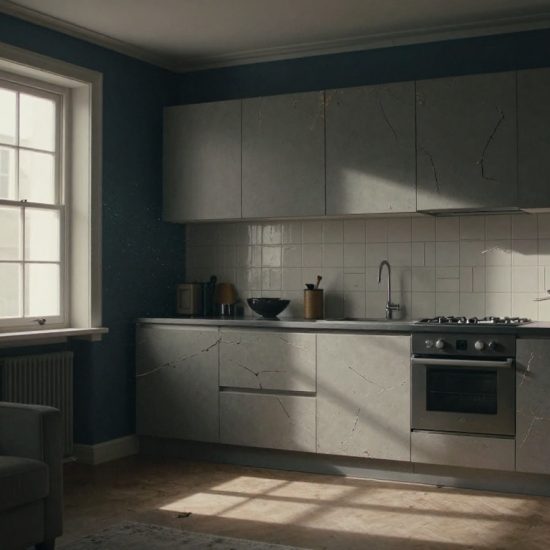
Vous voulez rénover un appartement à Genève et vous demandez si un permis de construire est nécessaire pour vos travaux ? Changer une cuisine, refaire une salle de bain, déplacer une cloison… Sur le papier, ça ressemble à un simple rafraîchissement. Pourtant, ces travaux de rénovation peuvent déclencher une autorisation de construire, parfois même quand tout se passe “à l’intérieur”.
The key point to remember is simple: for an apartment renovation, the issue of obtaining a building permit in Geneva is not addressed at the end, but at the beginning. Otherwise, you risk a stalled construction site, imposed modifications, or a strained relationship with the condominium association and your neighbors.
This article sets out a clear framework: which works can be carried out without a permit (rarely), which require authorization (often), and how to prepare a solid case, without unnecessary jargon.
Why apartment renovations often require permits in Geneva
Geneva operates under strict regulations: many renovations are considered transformations rather than simple maintenance. The primary reason is the LDTR (Law on Demolitions, Transformations, and Renovations), which heavily regulates housing, including energy-efficient renovation projects aimed at improving thermal performance. As a result, even a “standard” renovation may require an application to the Building Permits Office (OAC).
What the administration seeks to protect: the housing stock and reduced energy consumption , safety, the common elements of a building, and energy efficiency within the framework of the energy transition and the building’s energy performance assessment . What you, the owner , are looking for is a clean, sustainable, and trouble-free renovation. Both objectives can coexist, provided the project is properly defined from the outset.
Autre point souvent sous-estimé : en PPE, votre appartement n’est jamais totalement isolé. Les réseaux (eau, ventilation, écoulements), les dalles, les façades, les fenêtres, les gaines, ou même l’acoustique touchent vite aux parties communes. Une “petite” modification peut donc demander l’accord de la copropriété, en plus de l’autorisation cantonale.
Finally, there are several levels of procedure. For some interior work, an expedited permit (APA) may suffice. For others, a more comprehensive permit is required, including posting and, sometimes, a public inquiry. The distinction isn’t always clear. That’s why the first step should be pragmatic: clarify with the planning authority (OAC) before starting the work.
In Geneva, the best strategy is not to “try without.” It’s to validate early on what is required, then move forward with a clean file.
Construction work without a permit or with authorization: quick tips to avoid mistakes
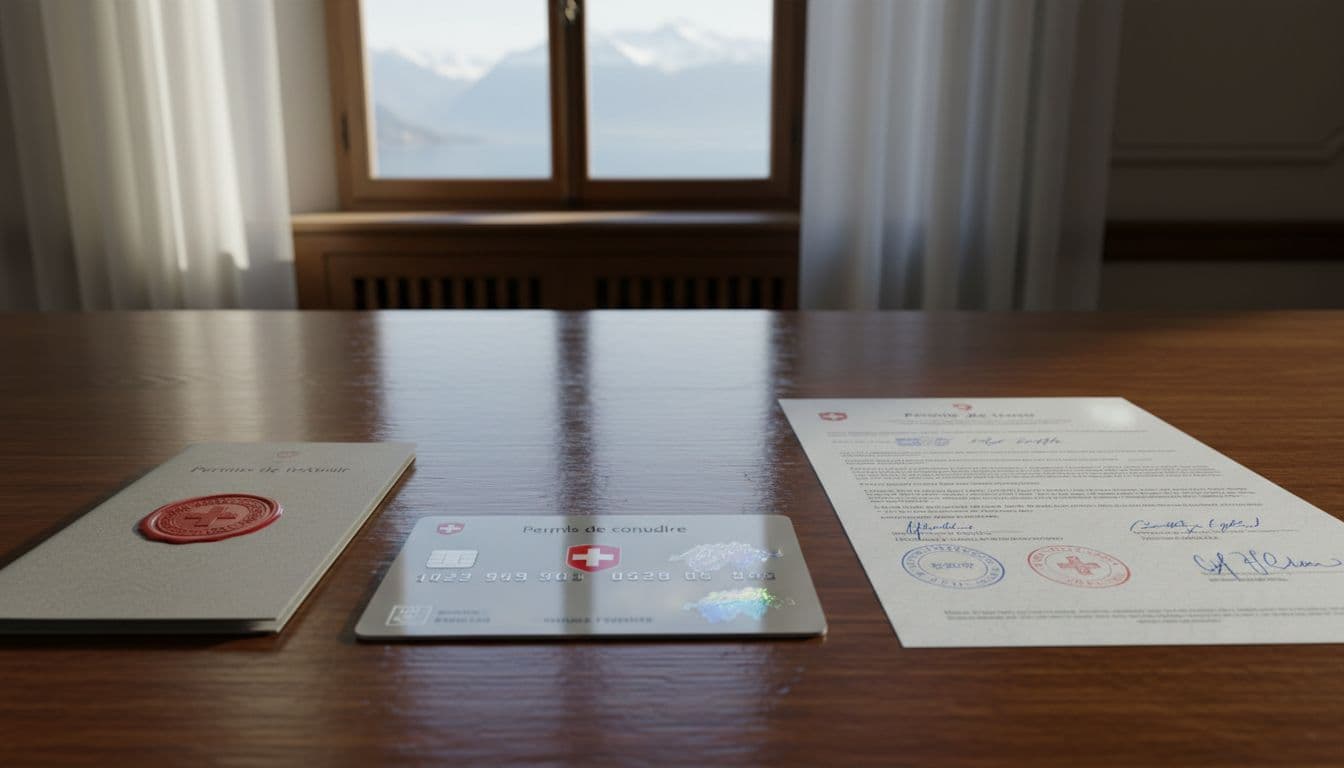 La question revient tout le temps : “Je refais juste la cuisine, j’ai besoin d’un permis ?” À Genève, la réponse honnête est : souvent oui, ou au minimum une autorisation de type APA. La règle n’est pas “intérieur = libre”. La règle, c’est “impact = autorisation”.
To be useful, we must reason in terms of concrete effects: are we touching the networks? are we modifying the distribution? are we significantly improving the standard? are we changing the external appearance? As soon as a “yes” appears, we must check the framework of the Geneva building permit .
Work generally without a permit (often limited, to be confirmed)
** Routine maintenance without changing standards : repairs, refurbishment, replacement of a worn part with an equivalent.
** Replacement “as is” (case by case): for example a kitchen replaced without moving the water points, without significant electrical modification, without changing the plan.
** Painting, tiling and finishing : as long as you do not touch any structure, installations, or common areas.
Works requiring authorization (common in Geneva)
** Kitchen and bathroom : as soon as the networks move, the installations change, or the transformation is substantial.
** Partitions and distribution : even more so if a wall can be load-bearing, or if acoustics and fire safety are involved.
** Windows, loggia, facade : almost always, because the exterior, the building envelope and thermal insulation are involved.
** Structure and penetrations : openings, reinforcements, modifications to slab, technical ducts.
** Change of use : for example, transforming a room, closing off a balcony, significantly altering surfaces.
This framework does not replace validation. The OAC decides on a case-by-case basis, and the PPE can add its own requirements. The best approach: request prior advice, then finalize the scope before signing the orders.
Before launching the plans: OAC, municipality, PPE and management, everyone has a say.
A well-conducted feasibility study begins by identifying constraints early on. The objective is to avoid creating a “dream” that will later clash with regulations, technical ducts, or a refusal from the condominium association, especially for a complete renovation that goes beyond simple refreshes.
First stop: OAC ( Office of Planning and Development). A preliminary contact often allows you to confirm the type of procedure expected (APA or a more comprehensive permit) and the documents required. This step is quick and can save you weeks of back-and-forth. Depending on the municipality and the nature of the property, additional requirements may also apply, especially if the building has specific features (protected status, urban planning restrictions, facade).
Second stop: Condominium ownership and regulations . In practice, as an owner, you check three things:
- The affected common areas (water columns, ventilation, slab, facade, windows, blinds, ducts).
- Rules regarding nuisances and schedules (noise, access, elevator, protection of common areas).
- Validation rules (required majorities, procedures, minutes, meeting deadlines).
Third stop: the property management company (if they manage the building). Even if you are the owner, the property management company often remains the point of coordination for access, building insurance, technical keys, and the organization of the construction site.
For you, the benefit is immediate: less uncertainty. For the neighbors, it’s a sign of professionalism. A renovation is like surgery in an occupied building. The cleaner the preparation, the smoother the execution.
Methodological tip: formalize a one-page “scope of work” document early on. This simple document aligns everyone (you, the project manager, the property management company, and the condominium association). Only then should the plans be finalized.
Preparing a solid case: the documents that prevent returns and delays
 Photo by WASSIM AHMED
An application for authorization is a story you tell to the authorities. If pages are missing, the story becomes unclear, and the process slows down. Conversely, a clear application reduces questions, and therefore delays. Furthermore, a well-prepared application opens the door to subsidies and tax savings, particularly for energy-efficient renovations.
Time-saving deliverables
Without going into an endless list, the following items come up frequently:
- “Existing” and “project” plans : legible, consistent, with a before/after logic.
- Note if the plans are old or inaccurate (very common in apartments).
- Description of the work : what changes, what does not change, and why.
- Photos of the current state: kitchen, bathroom, electrical panels, affected walls, facades or windows if affected.
- Estimates and perimeter assessment : not for “pretty purposes”, but to frame the transformation and estimate renovation costs.
- PPE elements if necessary: agreement, extracts from the regulation, validation of the principle.
- Diagnostics depending on the building (for example asbestos, lead or sanitation in certain old buildings), if the project requires it.
The detail that reassures the OAC (and the PPE)
Feedback often comes in regarding simple issues: air evacuation, sealing, acoustics, fire protection, and utility connections. Therefore, from the outset, demonstrate that the project is technically sound and involves a skilled workforce.
Practical advice: include a mini “evidence” file:
- Annotated photos (without over-labeling) to locate the areas.
- Before/after plans in the same format.
- A cut or a detail when you touch a duct, a shower, a ventilation.
At the same time, coordinate communication. A clear site notice to the building management and neighbors (duration, schedule, single point of contact, noisy phases) reduces tensions. And a reassured neighbor rarely objects.
Typical steps from the filing to the end of the work: a clear roadmap
The process of obtaining a building permit in Geneva is like following a well-marked path. It varies depending on the application, but the steps remain similar. The goal isn’t to rush things at all costs. The goal is to move forward without any obstacles.
Here is the most common sequence, with its checkpoints.
| Stage | Objective | Expected result |
|---|---|---|
| Information gathering from the OAC and the municipality | Confirm the procedure (APA or full permit) | Parts list and framing |
| PPE verification and management | Validate what relates to the commons | Agreement in principle, conditions |
| Choosing a representative | To bring the case forward and assume responsibility | Plans and coordinated file |
| Deposit | Officially register the request | File number, exam |
| Display and survey (if applicable) | Inform and allow for observations | Absence of opposition or processing |
| Follow-up and additional information | Answering questions from the services | Consolidated file |
| Decision has entered into force | Allow startup | Legal start of construction |
| Acceptance and completion of works | Close, lift restrictions, archive | Accepted work, traceability |
Regarding timelines, be cautious. A simple and well-prepared procedure can progress in a few weeks to a few months . Conversely, a complex case, an objection, or changes along the way can extend the duration, sometimes to several months or even longer . The project itself dictates the timeframe, and the quality of the application is a significant factor.
Practical tip: avoid ordering custom-made elements too early (joinery, stonework, kitchen), as this would prematurely commit your budget. As long as the permit hasn’t come into effect, you retain control.
Renovating in an occupied apartment: coordinating with neighbors without losing control
Renovating a condominium involves two key aspects: the technical side and the neighbors. Even a perfectly planned project can become a hassle if the organization is unclear. The opposite is also true. A well-managed project often goes off without a hitch, figuratively speaking.
A simple and effective communication framework
Before the first hammer blow, write down three things:
- A single point of contact (you, or your general company) for all questions.
- A phased plan : demolition, networks, closures, finishing touches.
- Access rules : elevator, stairs, protection of common areas, waste disposal.
Next, announce the key moments. Demolition, core drilling, and tile removal are the noise peaks. Clear information at the right time prevents complaints and disruptions.
Points of vigilance that frequently arise
Conflicts rarely arise from a tiled floor. They stem from an overlooked detail: dust in common areas, cardboard boxes in the hallway, exceeding working hours, or unsupervised workers. The best prevention remains proper planning.
For you, the stakes are also financial. A work stoppage is costly, even if no one “sees” the bill. Hence the importance of firm management: coordination of trades, quality controls to reduce costs through technical optimization, written records of approvals, and annual maintenance of installations to ensure their longevity.
A successful renovation means a construction site that progresses, but also a building that continues to function normally, preserving the comfort of life for residents.
Conclusion
Renovating an apartment in Geneva is rarely “just renovations.” The building permit in Geneva is treated as an integral part of the project, on par with the budget and schedule. Even major technical changes, such as installing a heat pump or modifying the heating system, must be integrated into the overall building strategy; similarly, complex roof work or adding an extra story can indirectly impact the top-floor apartments. Clarify the project early on with the Geneva Planning Authority (OAC), secure the condominium ownership agreement (PPE), and then compile a clear and concise application with before/after plans and straightforward supporting documentation.
If you want to proceed smoothly, choose a project manager who coordinates, documents, and stays on track until completion. Such a renovation significantly increases the market value of your property in Geneva. Your future home deserves better than an uncertain construction project.
For more info about our complete renovation services, follow this link