Renovating your kitchen in Geneva or the canton of Vaud is not “just changing furniture”. It’s a technical project, involving networks (water, drainage, electricity), building constraints, material choices, and a schedule that can quickly go off track.
The sensitive point is the gap between the Pinterest image and the reality of the construction site. Budget that inflates because the sink is moved, deadlines that slip because the worktop arrives too late, permit forgotten in the PPE, or undersized ventilation.
This guide outlines the essentials, focusing on kitchen renovations in Geneva and the Vaud region in 2026: key questions to ask, layouts, realistic price ranges, local regulations, and high-end choices that stand the test of time and boost property values in Geneva. The 2026 trends favor natural materials, matte finishes, soothing colors, and more discreet, and therefore better integrated, technology for a modern kitchen.
Start by asking the right questions to define a kitchen that simplifies your life
Before discussing style, we must consider functionality. A successful kitchen is recognized in everyday use, not in a photograph. The more you address current issues, the more you can avoid costly “minor adjustments” during the renovation.
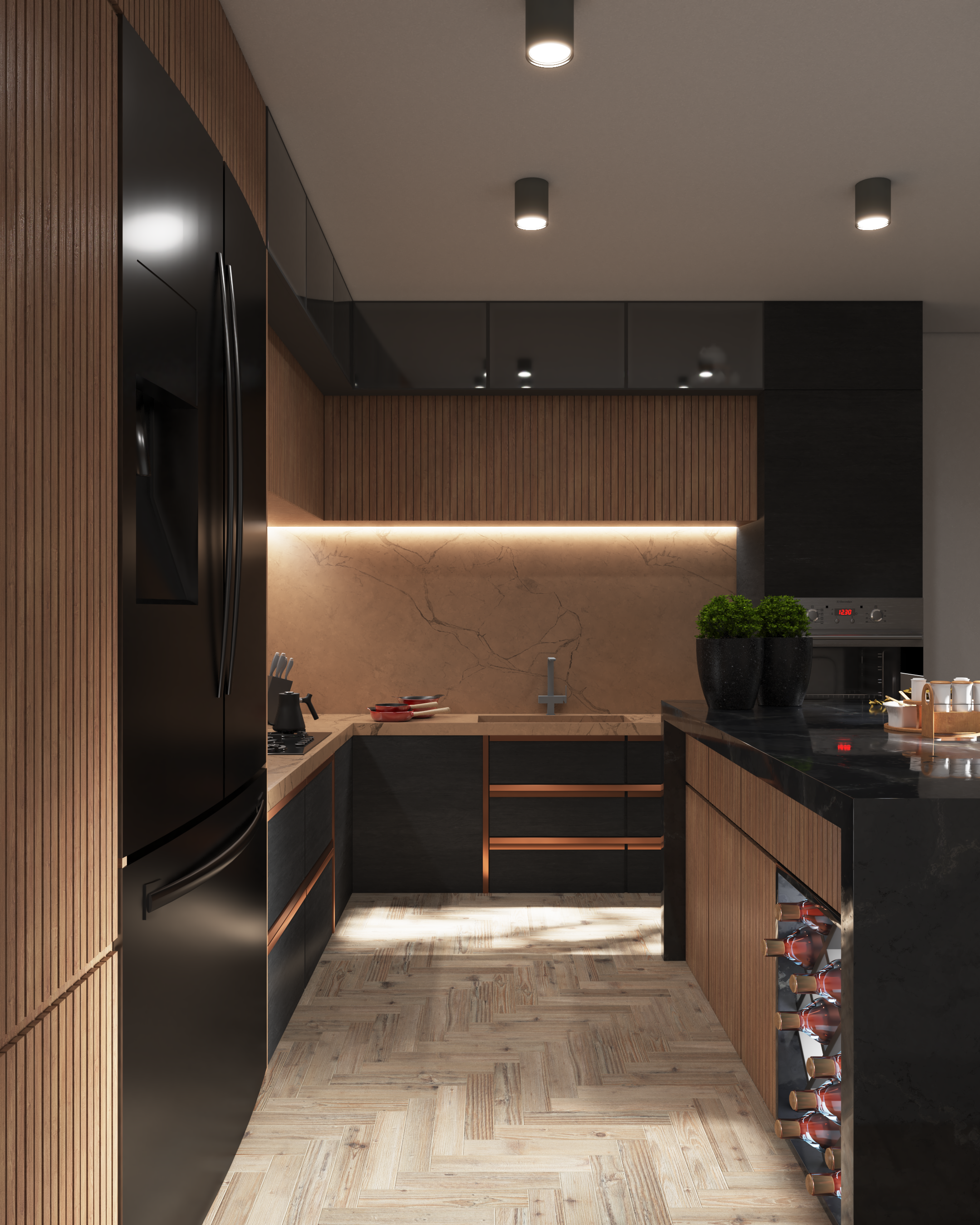 Photo by Bilal Mansuri
Where is your current kitchen holding you back? … storage, circulation, light, noise, maintenance?
Take 10 minutes, then write down what really bothers you. Not generalities, but specific examples. A mini checklist is all you need to assess the ergonomics of the kitchen:
- Worktop too short : we cook in the middle, so we clutter the sink.
- Poorly placed household appliances : oven too low, fridge far from the preparation area.
- Lack of power outlets : visible power strips, food processor and kettle in conflict.
- Noisy cooker hood : we lower the speed, so the smells remain.
- Passage zones : you have to go through the kitchen to get to the living room, leadind to collisions and stress.
- Difficult maintenance : grout and seals that turn black, surfaces that show marks, handles that catch.
Next, translate each obstacle into a “premium” renovation solution, without resorting to flashy tricks: full-height invisible storage spaces, fully extending sliding doors, integrated appliances, soft multi-zone lighting, matte surfaces that are more tolerant of fingerprints.
To situate the 2026 atmosphere (wood, natural tones, hidden tech), the summary of 2026 kitchen trends provides good reference points, provided you adapt them to your real constraints (technical gain, evacuation, ventilation).
Plan your layout without regrets: island, peninsula, open or semi-open kitchen
The kitchen layout determines 80% of the comfort. Style then adds the finishing touch.
- Open-plan kitchen : ideal if you entertain and have a spacious living area. However, acoustics, odors, and the view of the worktop need to be addressed.
- Semi-open : often the best compromise in Geneva (apartments) and western Vaud. Glass wall, partial partition, or architectural “frame.” It maintains a sense of community while limiting noise.
- Kitchen island : relevant if there is comfortable circulation around it (otherwise, the island becomes an obstacle). It also implies electrical outlets, lighting, and sometimes floor drainage.
- Peninsula : an effective solution when space is limited. You gain a dining area and work surface, with less technical complexity.
By 2026, the kitchen often becomes an extension of the living room. This works if the technology is up to par: a truly silent (and appropriately sized) range hood, closed storage to minimize visual clutter, grouped “dirty” areas (sink, waste, dishwasher), and a simple traffic flow.
Key principle to remember : the more you move water and drainage by modifying the basic plan, the more you pay in technical costs, risks, and delays.
Budget and deadlines in Geneva and Vaud: realistic orders of magnitude in 2026
Kitchen renovation costs can quickly add up because it involves several trades in a small area. In Geneva, costs often rise faster than in Vaud, especially due to labor, building logistics, and certain site constraints.
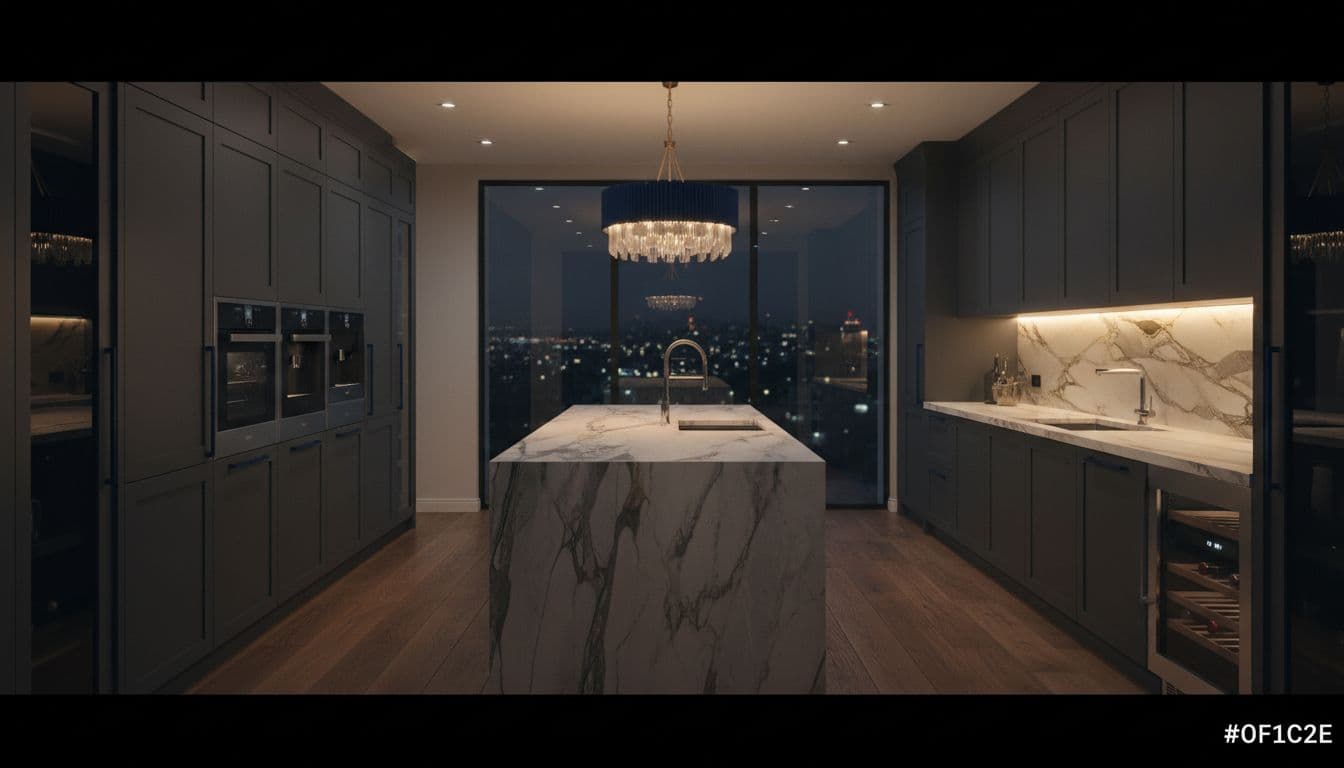
How much does a kitchen renovation cost depending on the level of service?
To help you plan your renovation budget, here are some 2026 price ranges in CHF, in simple terms. They assume a “standard” apartment kitchen, excluding major structural work.
| Level | 2026 price range (CHF) | What it most often covers |
|---|---|---|
| Refreshment | 5,000 to 15,000 | Painting, backsplash, lighting, minor replacements, sometimes worktop |
| Standard renovation | 25,000 to 40,000 | Furniture + countertop + appliances, limited modifications, complete installation |
| Complete high-end renovation | 50,000+ (up to 100,000+) | Custom-made furniture, stone, premium appliances, upgraded networks, demanding finishes |
The items that weigh the most, almost every time: custom-made furniture, worktop (stone, ceramic), household appliances, labor and coordination, adaptation of networks (sockets, lighting, water, drainage), ventilation and hood.
To compare your quotes with external benchmarks, the Kitchen Renovation in Switzerland: Quotes and Prices 2026 overview helps to put things into perspective. Keep one simple rule in mind: a low price often hides hidden costs (electricity, finishes, site protection, or coordination).
How much time should be allowed, and how can the schedule be avoided?
A complete renovation rarely happens “in two weeks,” except in very simple and well-prepared cases. Useful guidelines:
- Work : often 2 to 6 weeks on site for a complete kitchen.
- Up to 3 months if the complexity increases (extensive customization, walls, floors, network connections, building constraints, manufacturing lead times).
The real planning starts before demolition. Best practices remain basic, but non-negotiable: orders placed early, choices fixed before dismantling, socket plan validated, and margins of delay accepted on critical elements (worktop, appliances, custom fronts).
If you want a broader “market” view of costs and items, the summary of tips and costs for kitchen renovations puts budget lines into perspective. Then, everything depends on your specific situation: building, access, existing technology, and desired level of finish. To refine comparisons in French-speaking Switzerland, request a free quote from local professionals.
Local permits and rules: what changes between Geneva and Vaud
This is a surprising issue, especially for apartment renovations like kitchen remodels. In both cantons, renovations involving only furniture and finishes often go unrestricted. However, as soon as you alter the structure, ventilation, or other sensitive elements, the regulations become stricter.
In practice, the difference lies in the culture of control and the role of the authorities. Geneva more often requires approval, even for interior work. Vaud is generally more flexible, but the municipality retains the final decision-making power.
In a condominium, an additional layer of regulations must be added: rules, schedules, protection of common areas, debris removal, noise, and sometimes approval from the general assembly if you modify technical elements. A poorly managed range hood, for example, can become a collective issue (odors, ductwork, penetrations, noise).
In Geneva, APA is common, even for interior renovations.
In Geneva, prior authorization (APA) is often required whenever there is a significant modification, even if everything is done “inside.” The process involves a file, submission, sometimes a public notice, followed by a review period. The duration varies depending on the complexity and context (listed building, heritage constraints, common technical requirements).
The risk of misinterpretation is clear: work stoppages, requests for repairs, and tensions within the condominium association. The right approach remains simple: validate the need for action with the relevant department early on. This is an essential step in the phased renovation process, before finalizing purchases and manufacturing deadlines.
In the canton of Vaud, the municipality makes the decision, and some works proceed without permits.
In the canton of Vaud, many “like-for-like” replacements are permitted without a permit, as long as the structure remains unchanged and the exterior is not altered. However, certain factors require an application or at least approval: opening walls (load-bearing or not), significant modifications to utilities, complex ventilation systems, or impacts on shared elements.
A practical tip: request written confirmation from the municipality when the project goes beyond a simple replacement. It’s quick, and it strengthens your case if a neighbor complains later.
Design, materials and equipment: making high-end choices that last
High-end isn’t about “more expensive.” It’s about making sound choices: surfaces tailored to your needs, reliable hardware, attention to detail, and maintenance access planned from the initial design stage.
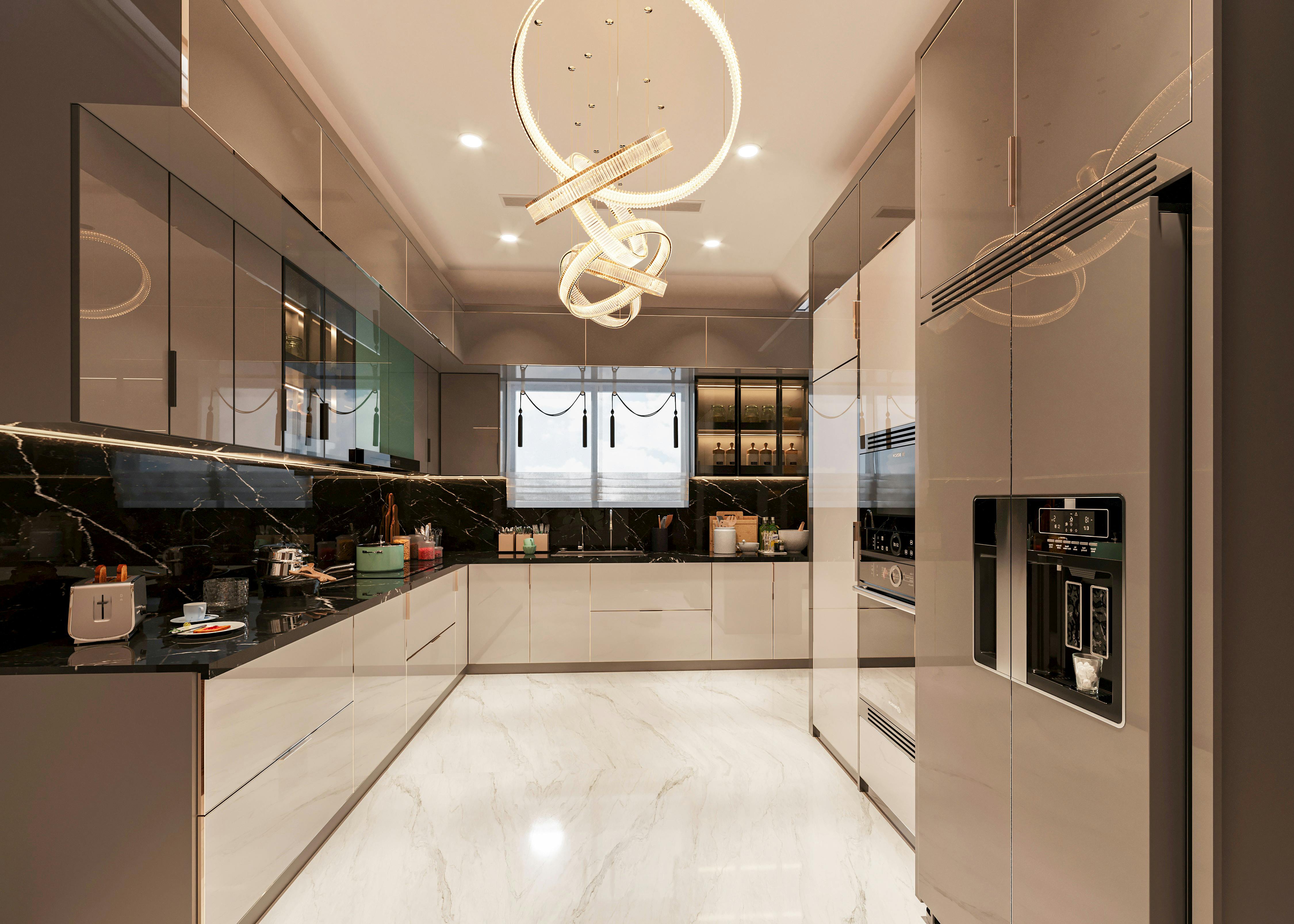 Photo by Rana Matloob Hussain
Materials and finishes: beauty must also withstand real life
The choice of materials is primarily determined by the worktop, kitchen cabinet fronts, and backsplash. A quick, practical comparison:
- Natural stone : superb, but requires careful selection and treatment depending on its porosity. Expect consistent maintenance of the worktop.
- Ceramic : very good resistance to heat and stains, ideal for intensive use, but be careful of impacts on edges.
- Composite (quartz) : good compromise, stable and regular, but sensitive to direct heat according to manufacturers.
- Solid wood : warm, but more demanding in terms of maintenance and disciplined use.
- High-end laminate : high-performing in terms of cost/performance ratio, very suitable for certain apartment kitchens, with careful installation on the worktop.
In 2026, matte and satin finishes are on the rise because they reduce glare and create a more subdued look; they are also easy to maintain. However, everything depends on the quality of the lacquer and its resistance to micro-scratches on kitchen cabinet fronts. Don’t confuse “matte” with “fragile”—they are two different things.
For realistic price ranges for custom kitchens in French-speaking Switzerland, the 2026 custom kitchen pricing page helps connect design, materials, and budget. The main advantage lies in the logic: more customization and fewer technical constraints mean fewer hidden costs.
Discreet technology: everyday comfort without being gimmicky.
Useful technology is almost invisible. It is felt.
A truly silent extractor hood (or integrated extraction), zoned LED lighting (worktop, ambient, circulation areas), well-placed power outlets (including in an island), waste sorting considered from the initial carpentry stage, a reliable sink and faucet, and highly energy-efficient appliances. The goal: to reduce unnecessary work and avoid minor repairs after delivery by prioritizing optimal energy efficiency.
Also consider maintenance. Easy access to valves, traps, and fittings prevents water damage. Similarly, an access panel or false ceiling designed for a service duct can save an apartment.
Kitchen renovation process: key steps for a stress-free result
A kitchen is like a chain. If one link is late, the whole thing falls apart. Hence the importance of a clear plan, validated before the first hammer blow.

Step-by-step renovation: why you can’t improvise
Here is the logical sequence, in short:
- Surveys and execution plans : measurements, constraints, socket plan, validations.
- Protection and dismantling : secure access, remove existing equipment cleanly.
- Networks : plumbing, drainage, electricity, ventilation, standby.
- Substrates : leveling compound for floor covering, wall repairs, preparation for kitchen tiling, base coat painting if necessary.
- Joinery installation : cabinets, adjustments, alignments, hardware by the kitchen craftsman, drawers and sliding doors, furniture handles.
- Worktop and backsplash : taking templates, making the worktop, installation, joints.
- Devices and connections : commissioning, testing, adjustments.
- Finishing touches : lighting, baseboards, touch-ups, cleaning, reception.
Frequent mistakes are costly because they come too late: changing your mind after ordering, underestimating electricity (too few circuits, poorly placed outlets), forgetting ventilation, or starting water points without a precise plan.
A single point of contact: the detail that makes all the difference in a high-end renovation
When several companies are involved, the question is not “who knows how to do it?”. The question is “who coordinates?”.
A single coordinator brings very concrete effects: a more readable budget (defined positions), fewer oversights between lots (electrician and kitchen fitter, for example), a schedule that is kept because dependencies are managed, and a single responsibility for the final quality.
This management approach is also found in the design of high-end, custom kitchens , with upfront planning followed by daily monitoring of the execution. In premium renovations, the difference often lies in the details: alignment, joints, levels, and anticipating building constraints.
Remember this : coordination is not a “plus”, it is a safeguard for your budget, your timeframe, and your finishes.
Conclusion
Successfully renovating your kitchen in Geneva or the canton of Vaud relies on five simple steps: clarifying your real needs, setting a credible budget and timeframe, checking permits (especially in Geneva), choosing sustainable materials, and ensuring coordination.
Your kitchen layout should simplify your life, not add compromises. If you plan the initial stages well, the project will run more smoothly, and the result will be closer to your vision of a modern kitchen.
To move forward smoothly, start by exchanging information on the scope, plans, constraints, budgets, and options. Good preparation protects your investment even before the first demolition.
For more information about our custom kitchen renovations, follow this link