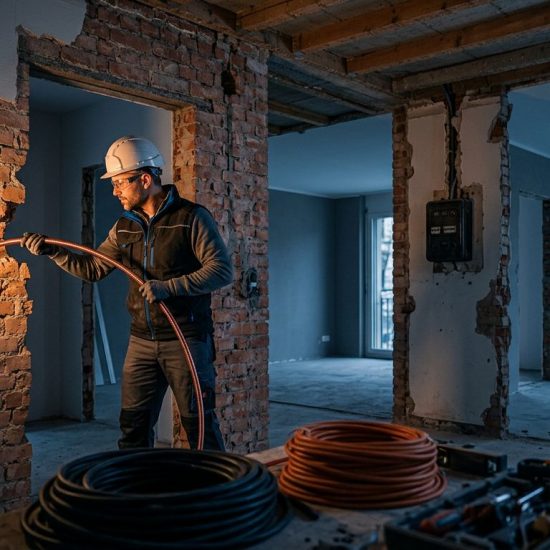
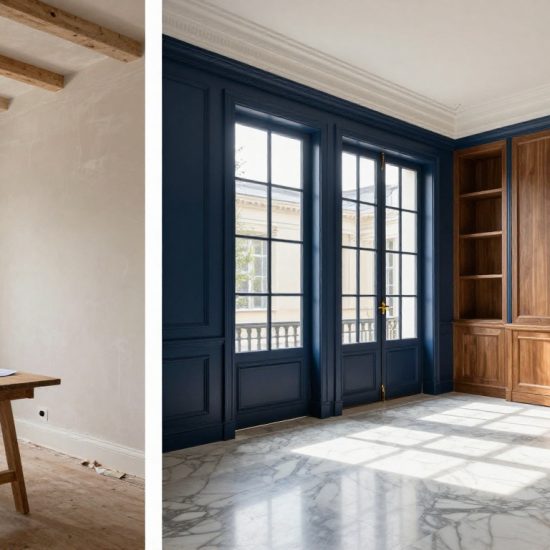
Moving a toilet two meters may seem insignificant on a plan. However, in a Geneva condominium, this choice can affect a common riser, the floor waterproofing, the slab, or the rights of neighbors.
The search for ways to change the layout of a bathroom in Geneva (PPE) therefore reveals a real question of methodology. Replacing a piece of furniture does not have the same consequences as moving a drain, a shower, or a technical partition.
Before any demolition, three points must be clarified: the rules of the PPE, the possible cantonal authorization and the risks of a construction site started without written agreement.
Changing the layout of a bathroom in Geneva (PPE): permits and penalties
The short answer is simple: minor interior renovations can sometimes be carried out without planning permission. However, as soon as the project modifies the layout, utilities, waterproofing, a duct, or a shared installation, the regulations change.
Start by reviewing the condominium regulations, the deed of incorporation, and the available plans. Then confirm the procedure with the Building Permit Office . In Geneva, even a partial modification to the layout of a dwelling may require a permit.
What usually remains in the private area
Replacing a bathtub, sink, toilet, bidet, or shower stall with an identical one is often considered maintenance or interior renovation. The landlord retains considerable freedom within their premises, as long as they do not damage common areas.
This distinction does not authorize work to be carried out without verification. Some regulations require prior notification to the building management, administrator, or trustee, even for private work. A written agreement prevents later interpretations.
Works affecting the condominium or the networks
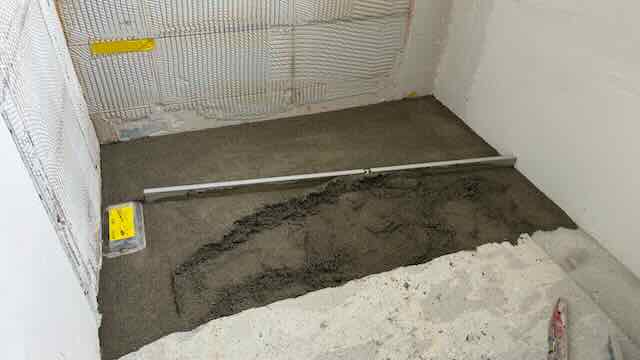
The level of vigilance increases when relocating a water point, drain, or toilet . A walk-in shower also requires a precise study of the slope, the drain, the available space, and the waterproofing .
Embedded pipes, vertical risers, service ducts, the slab, and certain partitions may be considered common areas. A poorly planned installation can cause a leak in a neighbor’s apartment several weeks after the work is completed.
A bathroom remains private in its use. Its plumbing and electrical systems are not always private in their structure.
What decision needs to be obtained from the PPE before construction begins?
A well-presented project is decided more quickly. The owner should first request a written opinion from the administrator, then submit the relevant technical documents before the general meeting if a decision is required.
The Swiss Civil Code distinguishes between necessary, useful, and luxury works. The applicable majorities depend on this classification, the building regulations, and the actual scope of the project. A transformation that increases the utility of a shared facility may require a supermajority. Purely aesthetic work on common areas sometimes requires a broader majority.
The file to prepare to get the project voted on
A clear document limits questions, delays, and reservations. It should allow the PPE (Project Management Team) to understand what will be changed, by whom, and with what protections.
Specifically, plan for:
- a plan before and after the work, showing the location of the sanitary fixtures;
- a diagram of the water inlets, outlets and connections concerned;
- details of the waterproofing, coatings and any possible partition repairs;
- the mandated companies, their insurances and the provisional timetable;
- the measures planned for noise, dust, the elevator and common areas.
Add the construction schedule, planned water outages, debris removal, and restoration procedures. These details seem secondary until the first disagreement arises.
When does a building permit become necessary?
The PPE agreement and the cantonal authorization are two separate processes. One never replaces the other .
In Geneva, a procedure may be required if the transformation significantly alters the layout, technical installations, or structural elements. The authority may also request additional information regarding existing materials, particularly when certification for hazardous substances is required.
The processing times indicated by the administration vary depending on the procedure and the quality of the application. The Geneva canton’s procedures guide helps identify the applicable formalities before placing orders.
Organizing a bathroom renovation without halting the construction work
In an occupied apartment, preparation is just as important as choosing the marble or the faucets. The correct order is as follows: feasibility study, validation with the building management, clarification with the relevant authority, written decisions, and then work planning.
For a project to change the layout of a bathroom in a Geneva condominium , this sequence protects the budget and schedule. Ordering the equipment before the utility connections are approved often creates unnecessary modification costs.
A single coordination, from planning to delivery
A general contractor can handle the plans, subcontractors, permit applications, and site inspections. The owner has a single point of contact responsible for the scope, deadlines, and quality of execution.
Bathroom renovation projects in Geneva become much smoother when technical decisions are made before the floors are opened up. Water supply, ventilation, plumbing, and finishes must all work together seamlessly.
Checks to be carried out before, during and after
A photographic inventory of the common areas must be carried out before the arrival of the contractors. This protects both the owner and the condominium association in the event of a dispute regarding a scratch, impact, or damage in the elevator.
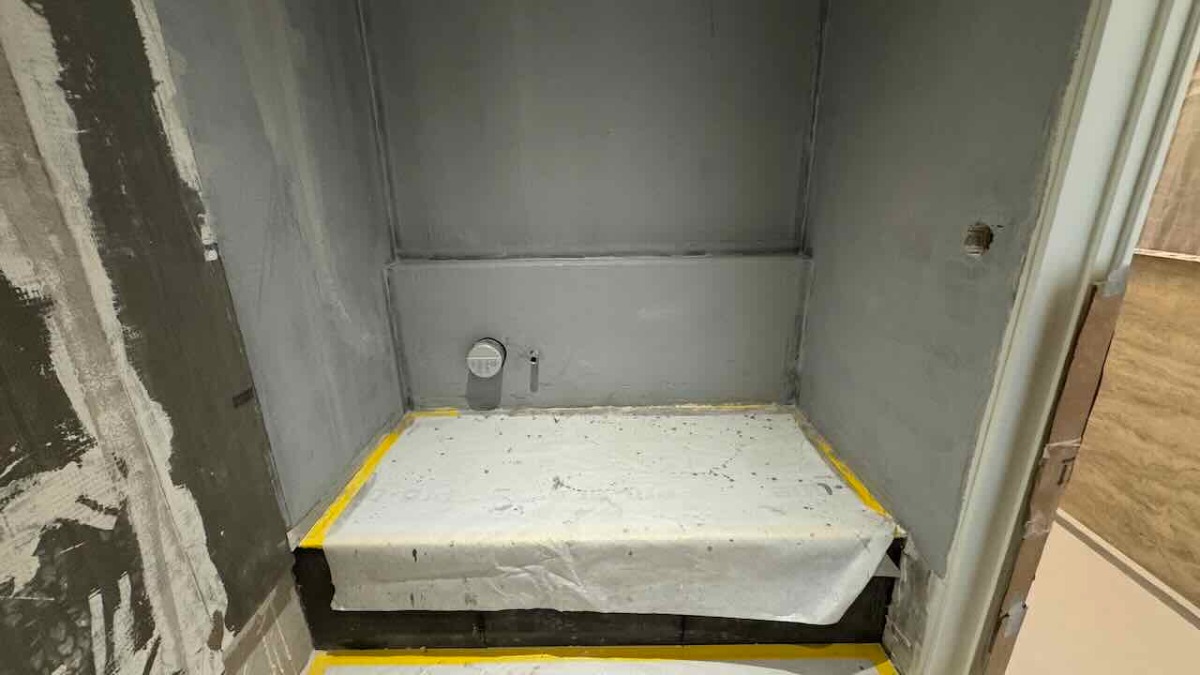
Before tiling, check the waterproofing and drainage. Then, keep all plans, invoices, warranties, reports, and photos of the plumbing and drainage systems before closing them off. If a shared installation has been affected, a formal inspection with the building management may be required.
The schedule, the neighbors, and access to the construction site
A bathroom renovation is never a one-off in an apartment building. Deliveries, water outages, debris removal, and noise also affect the neighbors.
A realistic schedule takes into account the decision-making timeframes for the building management, any potential requests for additional information from the canton, and drying times. It also reserves the necessary access, particularly in buildings with limited freight elevators or protected lifts.
The mistakes that create the most risk
The most costly difficulties often arise from a project initiated too early. An oral agreement from the building management company does not constitute formal validation of the property ownership plan.
Avoid moving a toilet without checking the drainage slope. Do not drill through a slab or conduit without proper technical markings. Do not modify the plans after the vote without informing those affected.
Also check the liability insurance of each company. Water damage, a breach in waterproofing, or a prolonged nuisance can involve several parties.
The APA is mandatory in the event of the relocation of plumbing elements and/or damage to common networks.
What are the penalties for carrying out work without authorization in Geneva?
The consequences play out on two levels. On the PPE side, the administrator or the co-owners can request the work to be stopped, the restoration and the repair of damage caused to the common installations or to other lots.
From a public law perspective, the authority can order an expert assessment, suspend the work, or require regularization. If the project cannot be regularized, compliance can be imposed. These procedures are governed by Geneva’s legal framework and directives .
Administrative fines are not automatic, nor are they the same for every case. They depend on the facts, the applicable law, and the decision of the authority. The maximum legal amounts can reach several hundred thousand francs in cases of serious violations or repeat offenses.
Who can be held responsible?
The property owner is primarily responsible if they commissioned or authorized the work. The company, agent, or professional who carried out non-compliant work may also be held liable, depending on their role.
Liability insurance can cover water damage, leaks, nuisances, damage to common areas, and repair costs. Insurance coverage should be verified before the first day of work, not after an incident.
What if the work has already started?
Suspend any sensitive work, especially work involving drainage, the slab, conduits, or waterproofing. Photograph the site and gather all existing plans, quotes, and correspondence.
Contact the building manager or the property management company as soon as possible. A technical assessment will help evaluate the situation and determine if regularization with the building management company or the relevant authority is possible. Concealing a modification to the building network almost always worsens the situation.
A successful bathroom begins before the construction work
Replacing equipment with an identical model is often simple. Moving a toilet, a drain, a water supply, a shower, or a technical partition requires much more rigorous control.
Before signing off on the work, have the condominium regulations, plans, and Geneva procedures checked. A single point of contact, capable of coordinating design, permits, contractors, and handover, transforms a sensitive project into a well-managed construction site.
Are you planning a renovation in Geneva? Plan a discovery call
Get an initial budget estimate for your project, independently, here .