An old electrical network can remain discreet for years, then become the weak point of the construction site at the worst possible time.
In a Geneva apartment undergoing renovation, the electrical system must be addressed early on. Bringing electrical systems up to code in Geneva isn’t simply a matter of changing a few outlets. It affects safety, the property’s value, insurance, and sometimes the entire renovation schedule.
Before opening up the walls, it is best to know what is mandatory, what constitutes targeted safety measures, and what needs to be validated on a case-by-case basis.
What the regulations require of you
In Geneva, the basic framework remains Swiss, with the OIBT (Swiss Federal Ordinance on Low Voltage Installations) and the technical rules applicable to low-voltage installations. In practice, the owner remains responsible for the safety of the installation. If a fault is detected, it must be corrected promptly by an authorized company.
In existing buildings, periodic inspections may be required depending on the installation category, often every 10 or 20 years. When ownership changes, an inspection may also be required if the last one was more than five years ago. During renovations, it is therefore essential to check the condition of the electrical panel, the earthing system, the residual current devices (RCDs), and sensitive circuits, especially in kitchens and bathrooms.
When renovations also involve energy efficiency, the scope of the project becomes broader. The canton details its requirements for high-energy- efficiency (HPE) renovations , and Geneva’s energy regulations provide the local framework. However, for a condominium apartment, the applicable requirements depend on the building, the common areas, and the exact scope of the work. Therefore, it is always essential to confirm the specific requirements applicable to your situation.
In an apartment, problems often come from the invisible.
In many Geneva apartments, the discrepancies are hidden behind the finishes. Old electrical panel, mixed circuits, incomplete earthing, insufficient protection, or too few outlets for today’s uses.
The kitchen often holds the surprises. Oven, hob, dishwasher, extractor hood, wine cellar, coffee machine – everything requires well-thought-out design. The bathroom demands the same rigor, with safety clearances respected and proper equipotential bonding.
An apartment may appear to function day-to-day, while remaining weak on invisible security points.
Partial renovations also create a trap. Part of the old network is kept, then new equipment is added. If the whole system isn’t properly reviewed, the work site quickly resembles a patchwork. Depending on the condition of the existing system, targeted safety improvements may suffice. But this must be verified, not assumed. If the building’s energy performance certificate (EPC) also includes roof repairs or a solar energy project, the cantonal regulations related to renovations and solar energy must be examined.
How to successfully bring the project up to standard without slowing it down
The right approach starts before demolition. A thorough survey prevents the late discovery of old wiring, a saturated conduit, or an undersized electrical panel.
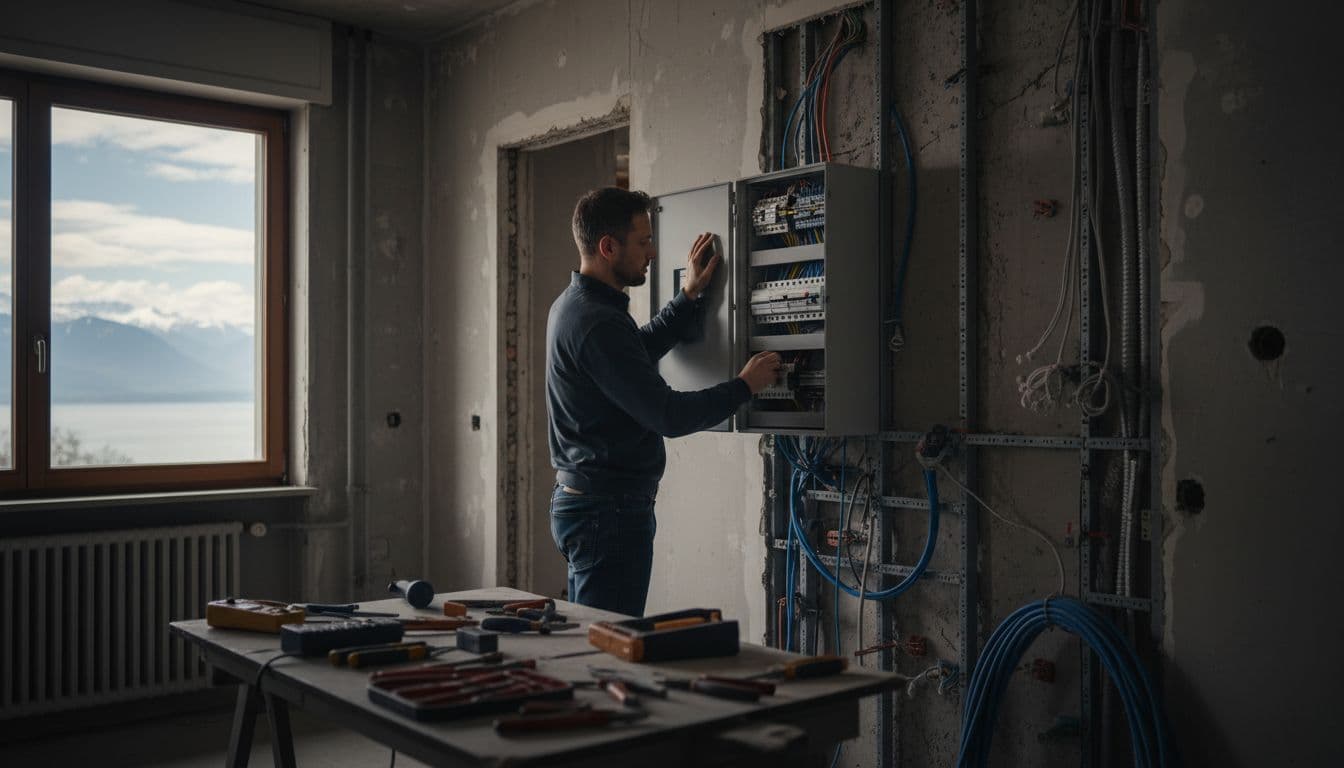
Next, the electrical work must be coordinated with the rest of the project. Drilling, false ceilings, custom furniture, tiling, and plumbing systems intersect everywhere. Project management for apartment renovations in Geneva helps minimize rework and hidden costs.
A few simple guidelines can help you stay on course:
- Diagnose the existing situation before the final quote.
- Define the actual uses of each room, not just the floor plan.
- Validate the technical steps before the finishing touches.
- Plan for the final inspection and the time for corrections.
Quand cette préparation est faite sérieusement, la mise aux normes ne freine pas le chantier. Elle le stabilise. Un plan lumière d’appartement fait partie de ces décisions à valider très tôt pour éviter les reprises coûteuses. C’est un peu la colonne vertébrale du projet, on la voit peu, mais tout repose dessus.
Costs and delays to expect in Geneva
There is no single official price for bringing electrical systems up to code in Geneva. The cost depends primarily on the age of the existing network, whether it’s a condominium, the level of finish, and the number of circuits to be created or upgraded.
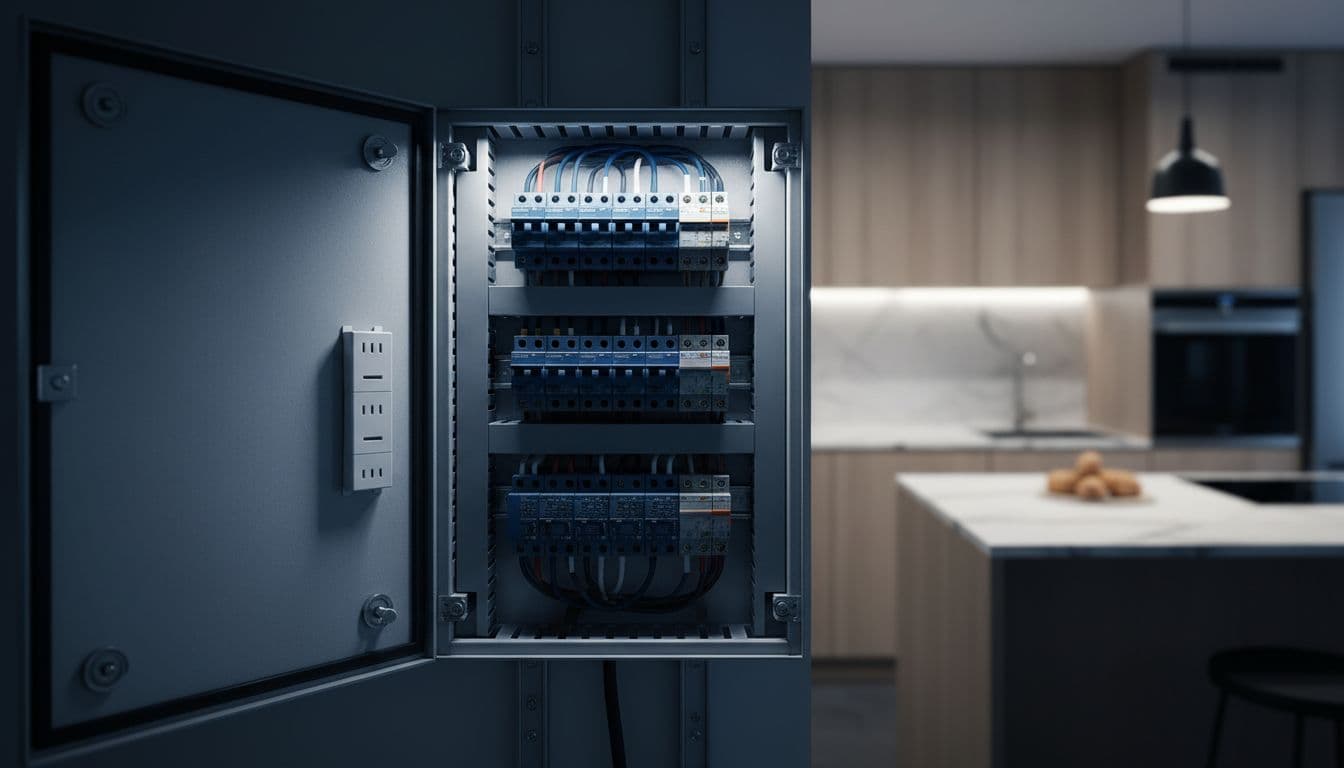
Here are some typical price ranges often found in quotes, to be confirmed after a visit and depending on the standard of the property.
| Intervention | Indicative budget | Frequent delay |
|---|---|---|
| Diagnosis, survey, targeted control | CHF 300 to 1200 | 1 to 2 days |
| Partial safety measures | CHF 2,000 to 6,000 | 2 to 5 days |
| New panel and point circuits | CHF 5,000 to 15,000 | 3 to 7 days |
| Almost complete renovation of an apartment | CHF 12,000 to 40,000+ | 1 to 3 weeks |
Reading the diagram is simple. The most expensive part isn’t always the materials. It’s often the wall repairs, coordinating with the kitchen or bathroom, high-end finishes, and unforeseen issues with existing conduits. Removing entire lines, doubling others, creating secure circuits… it all adds up quickly.
In terms of scheduling, a kitchen or bathroom renovation typically takes 2 to 4 weeks with a coordinated approach. If you’re significantly relocating electrical outlets, you’ll often need to add more time. And if the project also includes energy efficiency upgrades, the electrical system may need a more comprehensive overhaul, as explained in this summary of electrical standards for energy efficiency renovations in Switzerland .
When electrical issues are addressed early, everything else falls into place more easily. You reduce risk, protect the property’s value, and avoid unpleasant surprises during inspections or resale.
The best approach is to have the existing structure inspected before finalizing the plans, and then to confirm the local regulations applicable to your building and the type of work being carried out. A successful renovation is evident in the finishing touches, but its true strength often remains unseen .