A construction project can go wrong in a minute. A burst pipe, a new window broken, rain getting in before the final installation… or the bathroom is finished, the tiles laid perfectly, and upon delivery, a tile is cracked…
In Geneva, these types of incidents occurs as often in a condominium apartment as in a villa under renovation.
This is where construction insurance in Geneva becomes truly valuable. It’s not just about “being covered.” More importantly, it prevents unforeseen events from halting work, straining relationships with neighbors, or causing the budget to spiral out of control.
Before the first hammer blow, it’s best to know who pays for what, and within what limits.
What construction insurance in Geneva really covers
Firstly, in Geneva, construction insurance is not a general legal requirement for private renovations. However, it is often standard practice . A bank, an architect, a general contractor, or even a condominium association may request it before work begins.
In practice, the most common arrangement combines all-risks construction insurance, project owner’s liability insurance, and professional liability insurance for contractors. This framework is found on high-end renovation projects in Geneva because it minimizes potential roadblocks and clarifies responsibilities.
The TRC ( Technical Risk Control) protects the work in progress. If a newly erected wall collapses accidentally, if delivered parquet flooring becomes waterlogged before installation is complete, or if a partition wall is damaged during work, it is often the TRC that responds first. Its advantage is simple: it can intervene without waiting for weeks for everyone to argue about the exact fault.
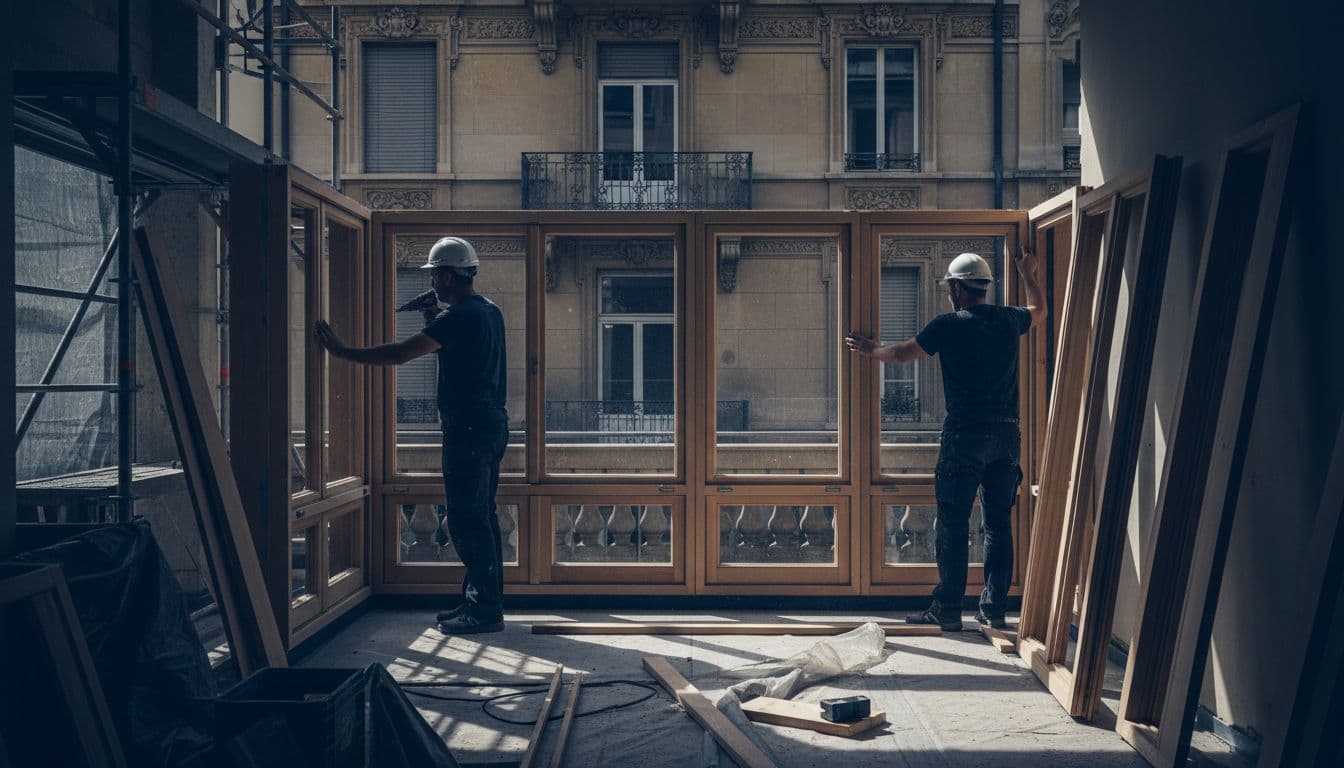
The project owner’s liability insurance covers damage caused to third parties as a result of the construction work. A concrete example is in Champel, where a component falls from the scaffolding and damages a parked car. Or, in Eaux-Vives, construction work causes a leak that affects the ceiling of the apartment below. In this case, this policy can cover the damage and legal fees.
Finally, the company’s liability insurance comes into play when the fault of a craftsman or subcontractor is established.
Common exclusions, warranty limits and deductibles
An insurance policy can sometimes resemble a large umbrella. Until the rain starts coming from the side. It’s the exclusions that make the real difference.
Normal wear and tear, a defect known before work began, intentional damage, or faulty workmanship that the contractor must rectify at their own expense are often excluded from coverage. Some policies also limit coverage to existing buildings, cellars, outbuildings, or undeclared high-value materials. On a high-end construction site in Geneva, this is a crucial point, especially with natural stone, custom-made joinery, or premium appliances stored on-site.
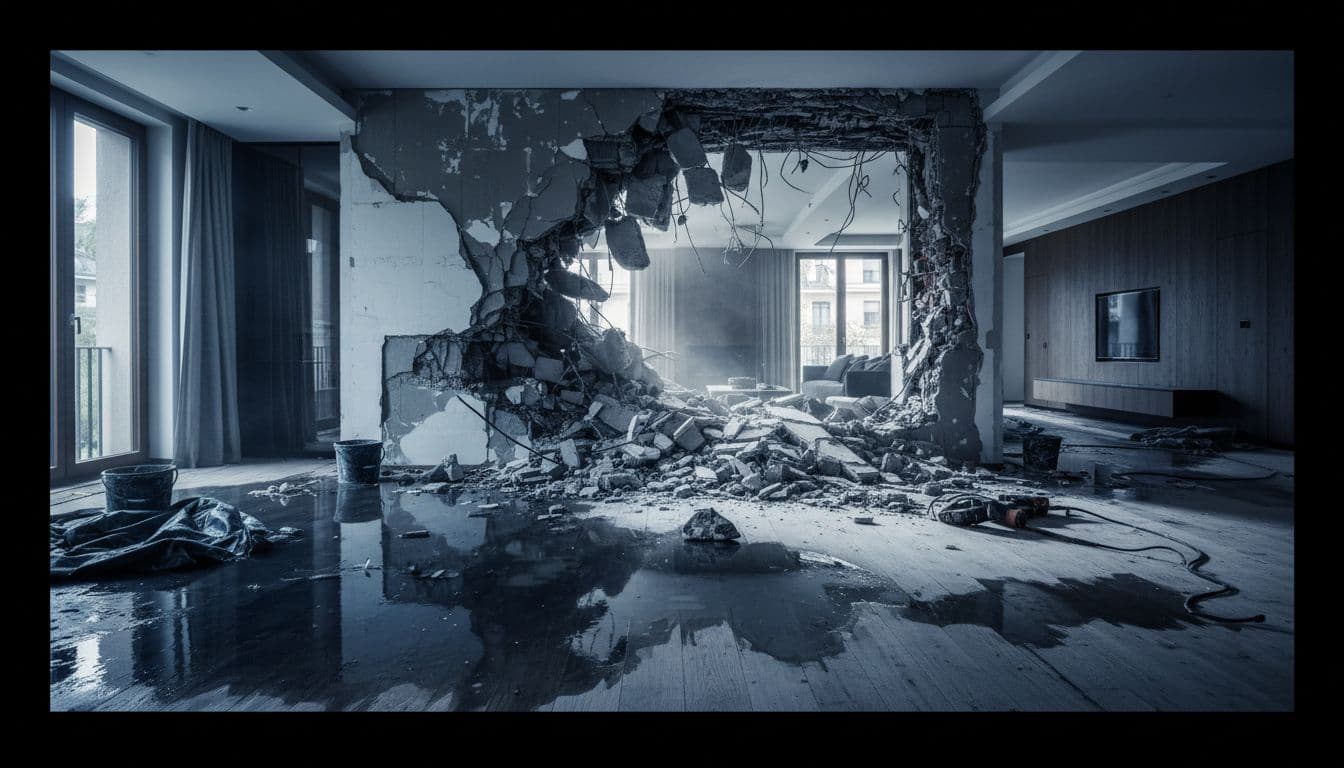
Deductibles also deserve your attention. In April 2026, amounts between CHF 500 and CHF 2,000 per claim were common, sometimes higher on large projects. A low deductible increases the premium. In return, it prevents you from paying a high price for a series of minor damages, which is common in interior renovations.
Another common point of confusion is that existing building insurance doesn’t always cover the construction site itself. In Geneva, the market operates with private insurers, not a cantonal monopoly.
The most expensive trap isn’t always the most visible. A small water leak at a neighbor’s house can cost more than repairing a wall.
Let’s take three simple cases. In Florissant, a plumber punctures a shared pipe, affecting the apartment below. The building owner’s liability insurance can cover the damage, and then the insurer seeks recourse against the responsible company. In Cologny, heavy rain damages a parquet floor delivered before the windows were installed; the construction all-risks insurance can cover the repairs if the case falls within the policy’s scope. Finally, the theft of high-end faucets from an unsecured property will often be denied if theft coverage is not included. Practical explanations regarding sanitation and insurance point in the same direction.
When several insurance companies intervene at the same time
On a construction site, contracts overlap like tram lines in the city center. This isn’t a problem; it’s normal. The real question isn’t about finding a “magic” policy, but about who intervenes first , and then how the insurers distribute the costs.
In practice, if the damage affects work in progress, the construction all-risks insurance (CAR) often opens a claim. If a neighbor or passerby suffers harm, the project owner’s liability insurance or the contractor’s liability insurance takes over. If an older part of the building is affected, the building insurance policy or the condominium association’s insurance policy may also come into play.
Here is the most useful summary to keep handy:
| Situation | Insurance that often intervenes | Sensitive point |
|---|---|---|
| New wall damaged during construction | TRC | Deductible, declared value |
| Downstairs neighbor flooded | Owner’s liability insurance, then contractor’s liability insurance if at fault | Precise origin of the disaster |
| Car hit by a falling object | Owner’s liability insurance or company liability insurance | Subcontractor involved or not |
| Materials stolen from the construction site | TRC if the flight is included | Storage conditions |
| Existing building affected by fire or natural event | Building insurance or PPE (Private Property Ownership), depending on the contract | Coordination with the construction site |
| Defect discovered after delivery | Contractual guarantee, company liability | This is not the TRC |
The key point to remember is that a single claim can involve two or three policies. Then, the insurers settle their respective shares amongst themselves.
It’s also important to distinguish between construction insurance and post-construction warranties . Since January 2026, certain Swiss regulations regarding construction defects have strengthened the owner’s position, granting them the right to free repairs in some cases and requiring a minimum notice period for reporting defects. This is helpful, but it doesn’t constitute insurance coverage for the construction phase.
A poorly insured construction project is a bit like renovating with an incomplete plan. Everything seems to be in place until the first unforeseen event. In Geneva, the best course of action remains simple: check the construction all-risks insurance, the owner’s liability insurance, the contractor’s liability insurance, the exclusions, the coverage limits, and the deductible before work begins.
Before signing the final quotes, request written confirmation from your insurer, broker, or a qualified professional. A well-structured construction insurance policy in Geneva protects your budget, your schedule, and your peace of mind.