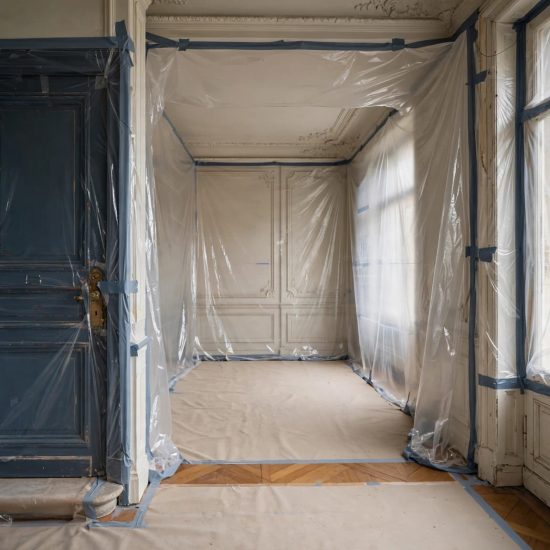
You open up a partition wall, and the real bill emerges behind it. A forgotten pipe, asbestos, an old crack, or a wall more fragile than expected can turn a simple demolition into a costly legal dispute.
In Geneva, the risk of hidden defects exists in both older apartments and villas renovated in stages. Consulting an expert in real estate renovations to assess this risk is vital. When a defect is discovered after the property has been opened, the question is not simply “how much will it cost?” but “who should pay, and on what basis?” The answer depends primarily on the contract, the roles of the parties involved, any reservations already noted, and the evidence kept from the moment of discovery.
Key Takeaways
- Liability after demolition depends on whether the defect already existed or was created or aggravated by the work: the company often pays for its defects via RC, the project owner manages old hidden defects with possible recourse.
- Distinguish between hidden defects (old invisible defect impacting market value), poor workmanship, consequential damages and apparent defects to determine who pays, deadlines (CO, SIA 118) and remedies (acceptance, prescription).
- Common cases in Geneva: asbestos, hidden cracks, weakened load-bearing walls, unmarked pipes; secure, document (photos, written), assess before resuming work and report without delay.
- Consult a real estate expert or construction lawyer for litigation: chronology, evidence and decisive acceptance reports, anticipating better than correcting in an emergency.
After demolition, the bill does not automatically fall on the same party.
In Swiss law, liability is not determined at the first blow of the hammer. It is first necessary to know whether the problem already existed or whether the demolition created or aggravated it.
If the contractor breaks a pipe, removes a support without shoring, or weakens a load-bearing wall, they may be held liable. In this case, their liability insurance often comes into play. Conversely, if the demolition reveals a pre-existing defect, invisible before the work began, the project owner often bears the initial costs of emergency measures and then seeks recourse against the seller, designer, contractor, or other party involved.
Geneva does not currently have a cantonal regulation that changes this federal principle for demolition. The Swiss Code of Obligations , the construction contract, and often the SIA 118 standard if it has been incorporated into the contract (with their respective warranty periods , particularly in the case of formal acceptance of the work ), remain the basis of the case, interpreted by the Federal Supreme Court , notably regarding the reporting of defects .
Since January 1, 2026, federal law has clarified certain points for new buildings and some buildings sold shortly after construction: reporting of defects within 60 days, a clearer framework for repairs, and a 5-year statute of limitations. For renovations in older buildings, it is still best to report defects promptly , in writing, with photos and the date.
Ultimately, four questions weigh heavily: who designed the demolition, who was supposed to check it, who knew about the risk, and what can be proven.
Hidden defect, faulty workmanship, consequential damage, apparent defect: the difference makes all the difference
The term “hidden defect” is not a catch-all phrase. It refers to a serious, pre-existing flaw that was not visible during a normal inspection and that significantly reduces the use or market value of the property. Hidden defects , such as certain construction flaws , directly impact this market value and give the buyer legal recourse, including rescission (cancellation of the sale) or a price reduction (actio aestimatoria), even when faced with a seller acting in bad faith who cannot limit their liability.
The defect , however, stems from poor workmanship. If a company removes a partition wall without taking precautions and causes cracks, it’s no longer a matter of a hidden defect , but rather of shoddy workmanship.
Consequential damage is the damage that follows. For example, a pipe bursting during demolition soaks a high-end parquet floor. The burst pipe is the cause. The damaged parquet floor is the consequential damage.
The apparent defect is visible, or could have been seen with normal attention. A crack already visible before the start of construction, or a lining that is clearly damp during the inspection, does not constitute a hidden defect under the same conditions.
For a simple reminder on the concept of hidden defects in real estate, this summary on real estate disputes helps to lay the groundwork.
This distinction has a concrete effect. It often determines who pays first, who can act next, and within what timeframe action is required.
The correct approach is to secure, document, and then report the defect in writing before any major rework.
The most frequent cases in Geneva after a partial demolition
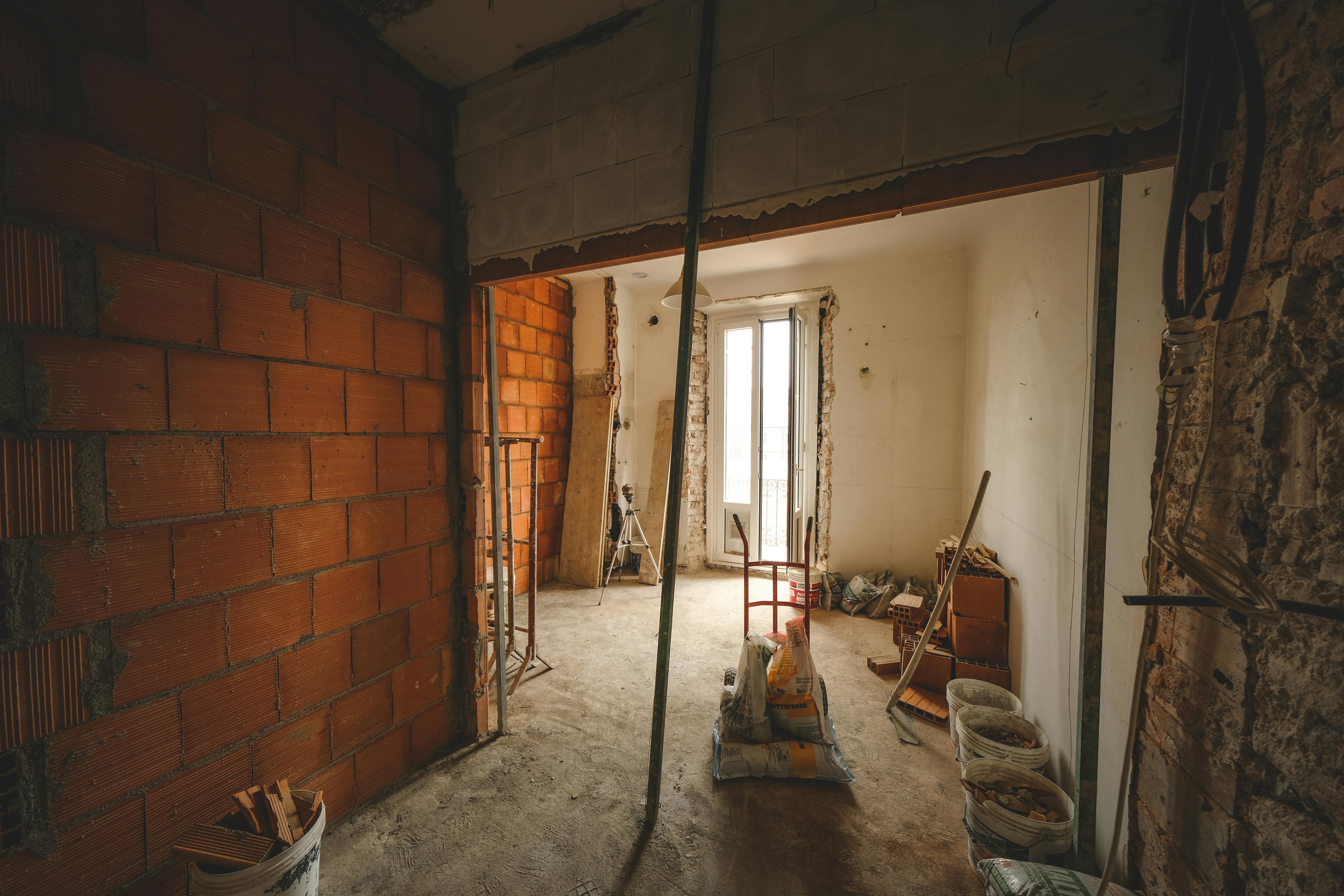
In Geneva, old buildings often hold surprises. Asbestos remains a classic example. Removing flooring, adhesives, false ceilings, or utility ducts can uncover materials that necessitate a work stoppage, analysis, and asbestos removal, requiring a new technical assessment. If no survey was conducted despite the foreseeable risk, liability may fall on the party responsible for organizing this verification.
Another common scenario is the appearance of cracks after a partition wall has been removed. These cracks can reveal underlying building defects hidden by the finishes. They can also result from poorly planned demolition. Without a prompt assessment, the two scenarios appear similar, even though they involve different parties responsible for the costs. The building owner should therefore commission a formal expert assessment before proceeding with any repairs.
Damage to a load-bearing wall is more serious. If the structure has been affected without proper assessment, the contractor, the project manager, the engineer, or several of them may be held liable depending on their role. In a condominium, this can also affect common areas, so the building manager sometimes becomes involved.
Unreported pipes create more complex disputes. If the plans were inaccurate or incomplete, the property owner may bear the additional costs associated with the existing structure, including extra demolition expenses that impact the reconstruction budget. However, if the company demolished without reasonable surveying or a duty to warn, it may be held liable.
There is also soil pollution, less common in apartments, but a real issue for some villas or plots of land with a history of industrial use. In such cases, the matter quickly moves beyond a simple construction dispute.
C’est pour cela qu’une approche de rénovation qui anticipe les surprises protège souvent mieux le budget qu’un chantier corrigé en urgence.
Frequently Asked Questions
What constitutes a hidden defect in the context of demolition in Geneva?
A latent defect is a serious flaw, already present but invisible upon normal inspection, that reduces the use or market value of the property. Unlike poor workmanship (bad work by the contractor) or an apparent (visible) defect, it gives rise to legal recourse such as rescission of the sale or a price reduction against the seller or other parties involved. In Geneva, the Swiss Code of Obligations and SIA standards apply, with mandatory prompt notification.
Who pays first if asbestos is discovered after opening?
The project owner often implements emergency measures (work stoppage, analyses, asbestos removal) if no prior survey was planned. Legal action is possible against the seller (proven concealment), the diagnostic agent, or the contractor if negligence is found. A formal expert assessment determines liability before compensation is awarded.
What are the time limits for reporting a defect after demolition?
Advertise immediately in writing with photos, especially for renovations of older buildings; since 2026, the deadline is 60 days for certain new/recently sold buildings, and 5 years for others. Formal acceptance of the work activates the guarantees stipulated in CO/SIA 118. A delayed appeal weakens its standing before the Federal Supreme Court.
What should be done immediately after discovering a hidden defect?
Sécurisez le chantier, documentez tout (photos datées, chronologie), puis notifiez par écrit tous intervenants (entreprise, ingénieur, vendeur). Mandatez une expertise rapide avant réparations pour qualifier (ancien ou causé). Cela protège budget et ouvre recours RC ou contractuels.
What is the difference between a hidden defect and faulty workmanship during demolition?
Hidden defect: a pre-existing, concealed, and invisible flaw affecting the value of the property (recourse available to the buyer). Poor workmanship: an error in execution by a contractor (e.g., a pipe breaking without shoring), which can be addressed through liability insurance and the contract. This distinction determines the initial payer and the applicable time limits for legal action.
Practical summary: who pays, and what recourse is available?
Here is a simple grid for reading the most frequent situations.
| Situation | Potential manager | Who pays first? | Possible recourse |
|---|---|---|---|
| Asbestos discovered after opening | Owner, agent responsible for the diagnostics, seller if concealment is proven | Often the owner is responsible for securing and removing asbestos. | Action for compensation, rectification, or against the seller, depending on the evidence |
| Cracks revealed after partial demolition | Old defect, company, engineer | Urgent measures often put forward by the owner or the construction insurance company, resulting in maintenance costs | Expert assessment, then contractual recourse, liability or damages |
| Weakened load-bearing wall | Company, project management, engineer | If the fault is clear, the company or liability insurance company will be liable. | Questioning of stakeholders, structural expertise and rectification |
| Unreported driving | Owner, designer, contractor based on plans and surveys | The person responsible for securing the property often pays first. | Legal recourse based on the duty to inform and warn, action for compensation |
| Soil pollution | Current owner, former identifiable polluter, seller subject to guarantees | Often the owner is in an emergency phase, requiring additional investments. | Civil recourse, steps with the authorities, and damages |
This table provides direction, not a verdict. In a serious real estate dispute, the timeline is as important as the default itself.
If the financial stakes are high, consult a Geneva-based construction lawyer or a local expert as soon as possible. An early assessment is often less expensive than resuming construction without evidence, thus avoiding unforeseen additional investments.
After demolition, the issue is therefore not only the hidden defect. It is necessary to determine whether the defect was old, visible, caused by the work, or aggravated by a lack of warning.
In Geneva, where the old often hides the essentials behind the finishes, the best protection remains the same: report it quickly, document everything, and have the problem assessed before discussing the bill. In matters of hidden defects in Geneva demolition, a real estate dispute requires a detailed expert report and verification of the handover report to protect the owner’s interests.
CONTACT US to start the process and get your project moving.