Moving a kitchen sounds appealing on paper. However, in a Geneva apartment, this choice quickly raises issues with water, air, noise, electricity, and sometimes even lease rights.
If you’re planning to move your kitchen in Geneva , the best approach isn’t to choose the cabinet fronts first. You must first check what the building, the management company, and the building’s technical specifications actually allow.
Start with the permits, the lease and the PPE
The first hurdle is the administrative one. If you’re a tenant, you must obtain written permission from your landlord before any work begins. Moving a kitchen doesn’t fall under the category of minor, tolerated repairs. Without this permission, you’re taking a serious risk, even if the work is done properly.
Without a written agreement, a beautiful kitchen can become a problem during inspection or inventory checks.
In Geneva, this type of project is generally considered an interior renovation. Therefore, it’s best to assume that a building permit will be required, often through an expedited procedure (APA). The canton provides details on the types of permits and the steps to follow for an expedited application . Depending on the building, the property management company, and sometimes the municipality, the required documentation may vary.
In a condominium, it’s also essential to review the building’s bylaws. Some buildings restrict drilling through the floor slab, modifying pipes, or working on shared utility shafts. Even if you own the interior of your unit, you don’t always own the building’s infrastructure and wiring.
Another sensitive issue is the housing status. In Geneva, housing renovations are closely monitored. The Geneva Regional Planning and Development Regulations (RDTR) document outlines this framework. If you’re changing the room layout, it’s best to have the approach approved before signing any contracts. This is where early consultation with a general contractor specializing in kitchen renovations in Geneva can prevent costly back-and-forth communication.
Evaluate the technical limitations of the building
A relocated kitchen only works well if it remains close to a logical technical core. The further you move the sink, dishwasher, and range hood from the existing cabinetry, the more cumbersome the project becomes. It’s a bit like moving the heart of a system without moving the arteries.
The biggest obstacle is often drainage. A wastewater pipe needs a consistent path and sufficient slope. In an apartment, this slope is often lacking. As a result, you sometimes end up with a raised floor, an unsightly step, or an impossible layout.
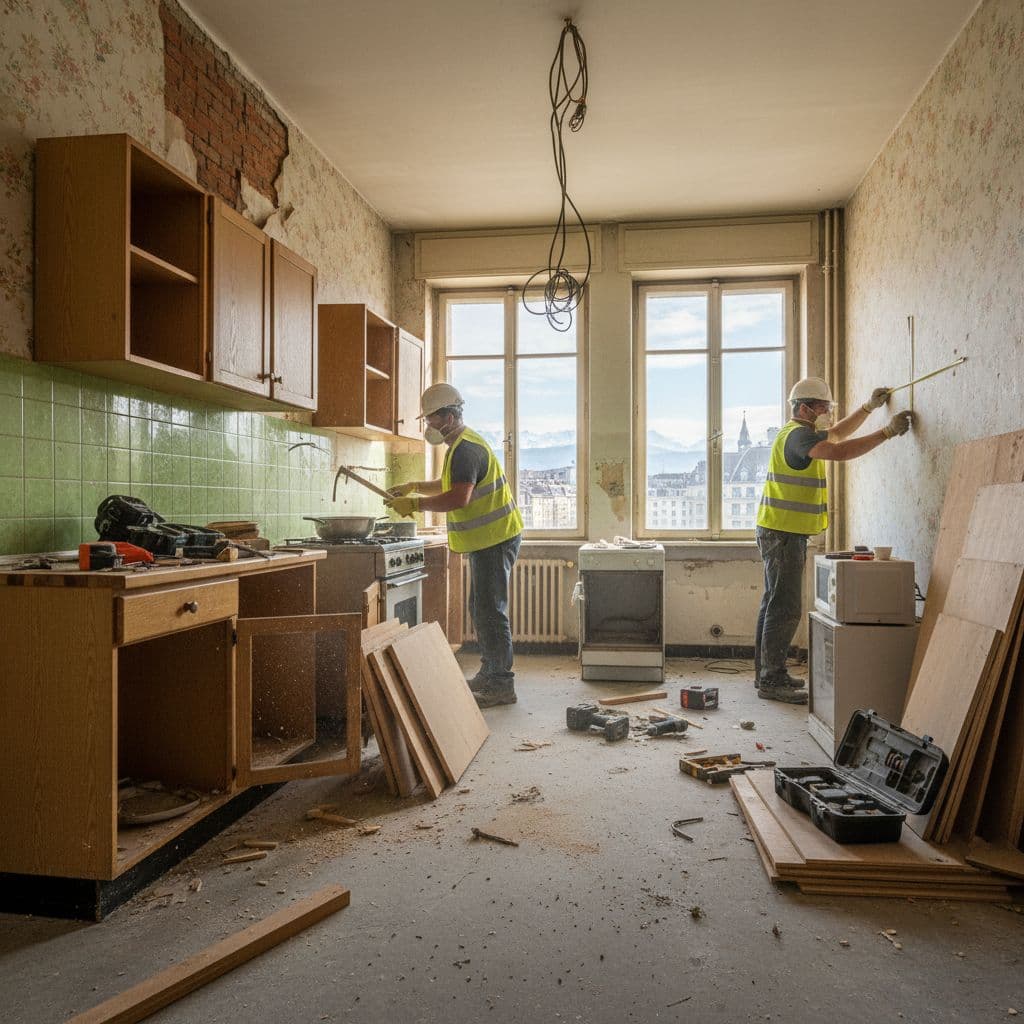
The structural work comes next. Before knocking down a partition wall or core drilling a slab, you need to know if the wall is load-bearing, if the slab can accommodate the building services, and if there are any shared conduits behind it. In older Geneva buildings, surprises are common. An elegant plan isn’t enough, because a beautiful work surface can’t compensate for a poor technical foundation.
The future room must also remain consistent with the existing kitchen design. Natural light, ventilation, access, usable floor space, and circulation around the furniture all matter. In Geneva, these points can be examined in the interior design application. The canton provides helpful guidelines on interior layouts . If you are converting a former living room into a kitchen, or vice versa, this verification is never a mere formality.
Ventilation, drainage, electricity, noise, and insurance
Ventilation deserves a proper technical discussion. A range hood isn’t just a decorative appliance. The ductwork route, the ability to vent the air, compatibility with the building’s structure, and odor control must all be checked. In some cases, a recirculating range hood can be a temporary solution, but it doesn’t solve everything, especially if the room already lacks ventilation.
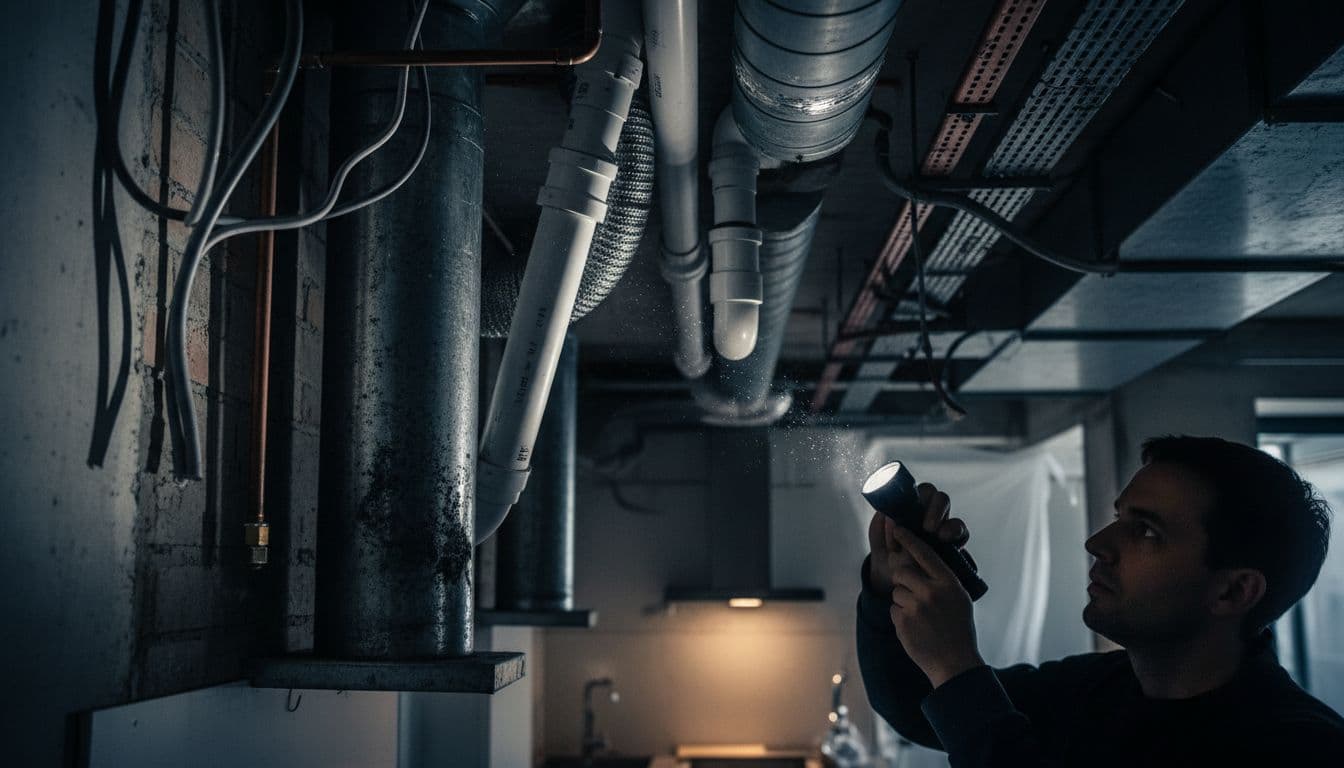
Water supply, wastewater, and, if applicable, gas connections must be reviewed together. A shift of just a few meters can complicate the entire project. Therefore, the actual route must be validated, not just the ideal layout on a 3D plan.
Electricity is just as important. Oven, cooktop, wine cellar, countertop outlets, lighting, ventilation, built-in appliances—each requires a suitable power supply. In Switzerland, this work must be entrusted to qualified professionals. If you relocate the kitchen without properly updating the electrical wiring, you create an invisible fault, and therefore a future problem.
Noise is immediately noticeable. A dishwasher against a bedroom wall, a garbage disposal, or poorly secured pipes can disturb neighbors and compromise comfort. Construction hours are also regulated, with particular attention paid to nighttime work. In a high-end building, silence is almost as important as the quality of the materials.
Finally, consider insurance. Notify your home insurance provider and ask what coverage applies during the renovations. On the construction site side, check who is liable in case of water damage, fire, or damage to the downstairs neighbor’s property.
Anticipating the end of the lease, or the resale
If you are a tenant, the question isn’t just “can I make changes?”, but also “will I have to restore the property to its original condition?”. The landlord can authorize the work while requiring that it be returned to its original state upon moving out. This point must be clearly stated in writing.
If you own your home, keep all documents. Plans, approvals, quotes, meeting minutes, technical certificates, and invoices will be useful later, for example, when selling your property, in the event of a claim, or when negotiating with the condominium association. A kitchen that has been moved without any written record quickly loses its perceived value.
Your checklist for a stress-free trip

Before starting the project, go through this simple checklist:
- Check for written agreement from the landlord if the accommodation is rented.
- Review the PPE regulations and the rules of the management company.
- Confirm if a building permit is required.
- Record the exact location of the water, drainage and ventilation columns.
- Check the feasibility of the drainage slope.
- Have the walls, slab, penetrations and common ducts checked.
- Restart the electrical project with a qualified professional.
- Assess the noise risk to neighbors and plan for acoustic treatment.
- Clarify the construction site insurance before the first hammer blow.
- Include in writing the restoration to its original condition at the end of the lease, if applicable.
A successful kitchen relocation begins with the right checks, at the right time.
This preliminary work is what protects your budget, your schedule, and the final quality. If anything remains unclear, get it resolved before the work begins, not during construction.
CONTACT US to start the process and get your project moving.